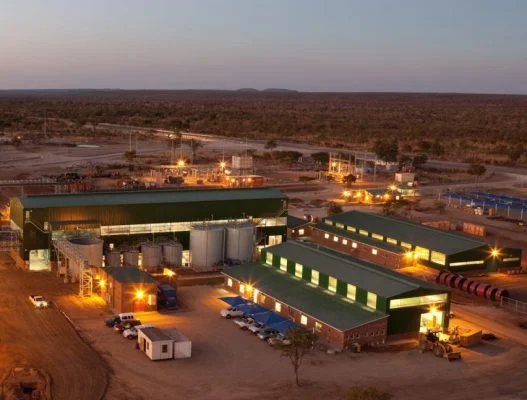
Zimplats has commissioned a new 38-megawatt smelting furnace at its Selous Metallurgical Complex, delivering a major boost to Zimbabwe’s value-addition agenda and strengthening the country’s position as a global producer of platinum group metals (PGMs).
The US$400 million investment forms part of the company’s broader US$1.8 billion expansion programme, one of the largest private-sector capital injections in the mining industry in recent years.
With the new furnace now in operation, Zimplats’ smelting capacity rises from 135,000 tonnes to 380,000 tonnes of concentrate per year, significantly increasing the country’s ability to process minerals locally rather than exporting raw ore.
The expanded capacity also enables Zimplats to process material from third-party producers, supporting emerging miners and improving national beneficiation output.
Zimplats Senior General Manager – Processing, Louis Mabhiza, said the project marks a milestone not only for the company, but for Zimbabwe’s industrialisation ambitions.
“We’ve been talking about this project for quite a long time, and I’m very excited that now we have it delivered,” he said. “When I joined Zimplats, we were processing only 2 million tonnes of ore per annum. We later doubled to 4.2 million tonnes, then to 6, and today we are sitting on about 7.9 million tonnes. What has been built in the past five years is a real success.”
Completed in just 36 months, the project exceeded global construction benchmarks. Chief Technical Officer Amend Chiduma noted that the furnace has already surpassed its operational targets within its first year — a development he says will have a ripple effect across the wider mining sector.
“This project didn’t just create a physical asset on our value chain; it also helped develop the right type of skills we need,” he said. “It is enabling Zimplats to grow organically and through acquisitions, while also creating processing opportunities for new PGM players. The social, economic and technical benefits are wide-ranging.”
The investment forms part of a broader effort to increase Zimbabwe’s refining capacity and deepen local participation in the PGM value chain. The next phase includes the installation of a sulphur dioxide abatement plant, which will reduce emissions while producing a by-product for local fertiliser production — supporting domestic industries.
Zimplats is also expanding its renewable energy portfolio through the first phase of a 35-megawatt solar farm, ensuring the new smelting infrastructure operates with a smaller carbon footprint.
The commissioning of the new furnace is expected to reinforce Zimbabwe’s commitment to mineral beneficiation and help position the country as a competitive, value-driven player in the global PGM market.