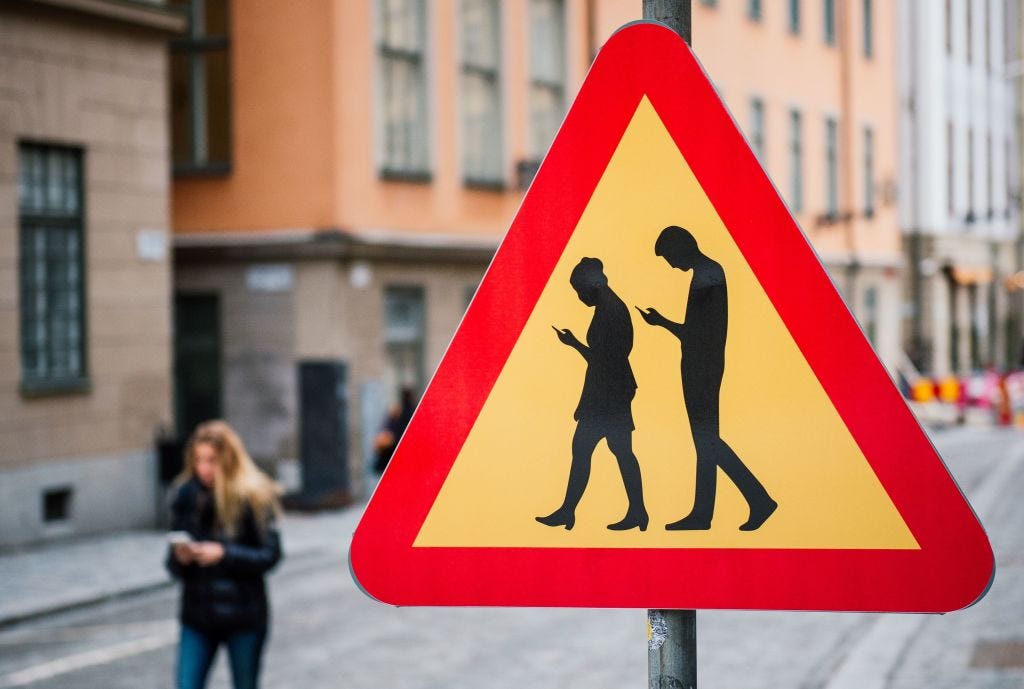
Zimbabwe’s police decision to fine pedestrians for using mobile phones and headphones while crossing roads has ignited a national debate, pitting road-safety concerns against questions of fairness, enforcement priorities, and life in increasingly connected cities.
Under the new crackdown, pedestrians caught distracted by gadgets while crossing roads face a US$30 fine. Police say the measure is a response to a growing body of evidence linking digital distraction to fatal accidents, particularly involving pedestrians who fail to hear approaching vehicles or trains.
Supporters of the policy argue that it is long overdue.
“When pedestrians block out sound, they lose one of their most important warning systems,” Msebele said, noting that many victims never hear horns, sirens—or train whistles—before it is too late.
Those warnings have already played out in tragedy. In Gweru, a pedestrian wearing earphones was struck and killed by a train after failing to hear it approaching. In Mutare, another pedestrian listening to music narrowly escaped death when a train bore down on her; she was alerted only after the engineman hurled a water bottle to get her attention. Police cite such incidents as stark reminders of how distraction can turn ordinary commutes fatal.
Yet the policy has also drawn sharp criticism. Detractors say the police are unfairly shifting responsibility onto pedestrians while under-enforcing traffic laws against motorists. In busy central business districts, residents argue, phone use is often unavoidable—whether for navigation, work calls, or coordinating transport.
“Drivers are the ones controlling vehicles,” one commuter said. “Why punish pedestrians instead of focusing on dangerous driving?”
Legal experts note that the enforcement is grounded in existing law. Under Zimbabwe’s Criminal Procedure and Evidence Act (Chapter 9:07), the offence of public nuisance covers a range of minor but potentially dangerous public behaviours, allowing police discretion to act when circumstances warrant intervention. Authorities say the pedestrian crackdown falls squarely within that framework.
Police insist the directive is not about punishment but prevention. As urbanisation accelerates and smartphone use becomes ubiquitous, law-enforcement officials argue that road safety strategies must evolve to reflect new risks—not just speeding or drunk driving, but digital distraction as well.
Whether the measure will reduce fatalities or fuel further public resistance remains to be seen. What is clear is that Zimbabwe’s streets have become the latest battleground in a global struggle to reconcile technology, personal freedom, and public safety—one crossing at a time.