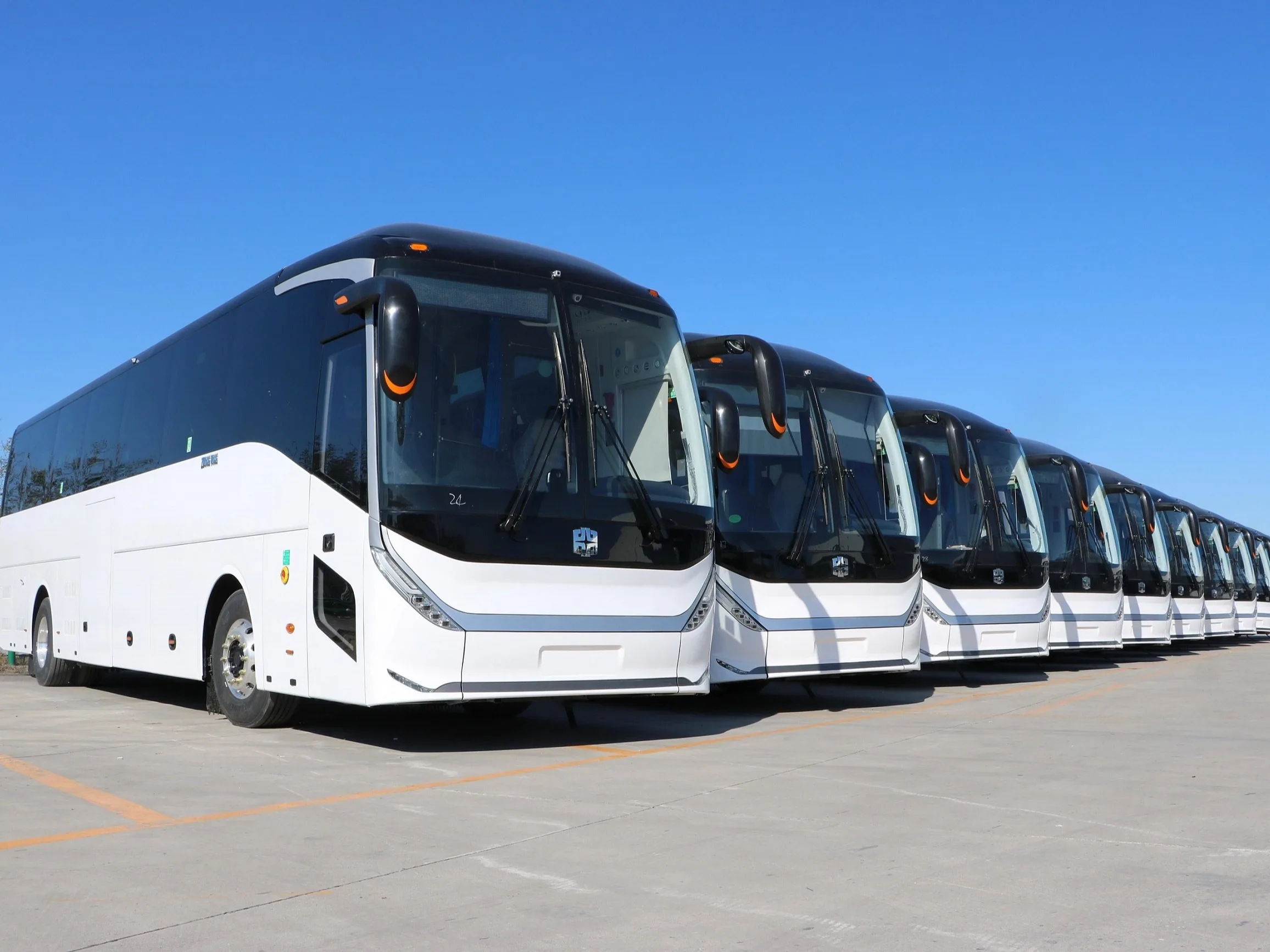
Buy Zimbabwe has called on the Ministry of Primary and Secondary Education to reconsider the specifications of a recent tender for 200 school buses, citing concerns that the current requirements unfairly exclude local manufacturers. In a letter addressed to the Minister of Primary and Secondary Education, Hon. Torerayi Moyo, and obtained by Great Dyke News, Buy Zimbabwe’s CEO and Chairman, Munyaradzi Hwengwere, emphasized the economic benefits of prioritizing local bus assemblers like AVM Africa, Deven Engineering, Willovale Motor Industries, and Quest Motor Corporation.
The tender, identified as MOPSE12 and advertised on July 27, 2025, specifies the procurement of 200 Chinese Zhongtong buses, a condition that Buy Zimbabwe argues sidelines local manufacturers capable of meeting the demand. “We share the concerns expressed by our member [AVM Africa] on the tender documents which specifically state that 200 Chinese Zhongtong buses are required,” Hwengwere wrote. “We feel this requirement excludes our member and other local bus and truck assemblers from participating in the tender.”

The letter highlights the significant economic contributions of Zimbabwe’s bus manufacturing sector, which at its peak employs between 10,000 and 15,000 people directly and supports up to 100,000 jobs along the value chain. Local manufacturers, such as AVM Africa, produce buses with 65% local content, designed to suit Zimbabwe’s terrain and offered at competitive prices. Hwengwere underscored that engaging local firms for the tender would not only bolster the industry but also align with President Emmerson Mnangagwa’s vision of “Nyika inovakwa nevene vayo, Ilizwe lakhiwa ngabanikazi balo” (The nation is built by its people).
The appeal comes at a time when the government is under increasing pressure to support local industries as part of its economic recovery strategy. According to data from the Procurement Regulatory Authority of Zimbabwe (PRAZ), the government is the largest procurement entity in the country, with the tender market estimated at USD 2 billion annually. Leveraging this purchasing power to prioritize local suppliers could stimulate job creation and industrial growth, particularly in sectors like bus manufacturing, which have been hard-hit by competition from imported goods.

Buy Zimbabwe’s call echoes sentiments previously expressed by Finance and Economic Development Minister Professor Mthuli Ncube, indicated that the government is actively considering local bus manufacturers for its mass public transport system to encourage the purchase of locally manufactured goods. However, the specific requirement for Chinese Zhongtong buses in the MOPSE12 tender appears to contradict this policy direction, raising questions about the consistency of government procurement practices.
The letter from Buy Zimbabwe urges the Ministry to revise the tender specifications to allow local manufacturers to compete, emphasizing that such a move would “revamp the local industry” and drive economic growth. It also aligns with broader efforts by the Procurement Regulatory Authority of Zimbabwe (PRAZ) to enhance transparency and efficiency in public procurement through the electronic Government Procurement (eGP) System, which aims to promote fair competition and integrity.
As of now, the Ministry of Primary and Secondary Education has not publicly responded to Buy Zimbabwe’s appeal. However, the issue is likely to spark further debate about the role of government procurement in fostering local industrialization. With the tender’s closing date still pending, stakeholders are watching closely to see whether the Ministry will amend the requirements to accommodate local manufacturers.