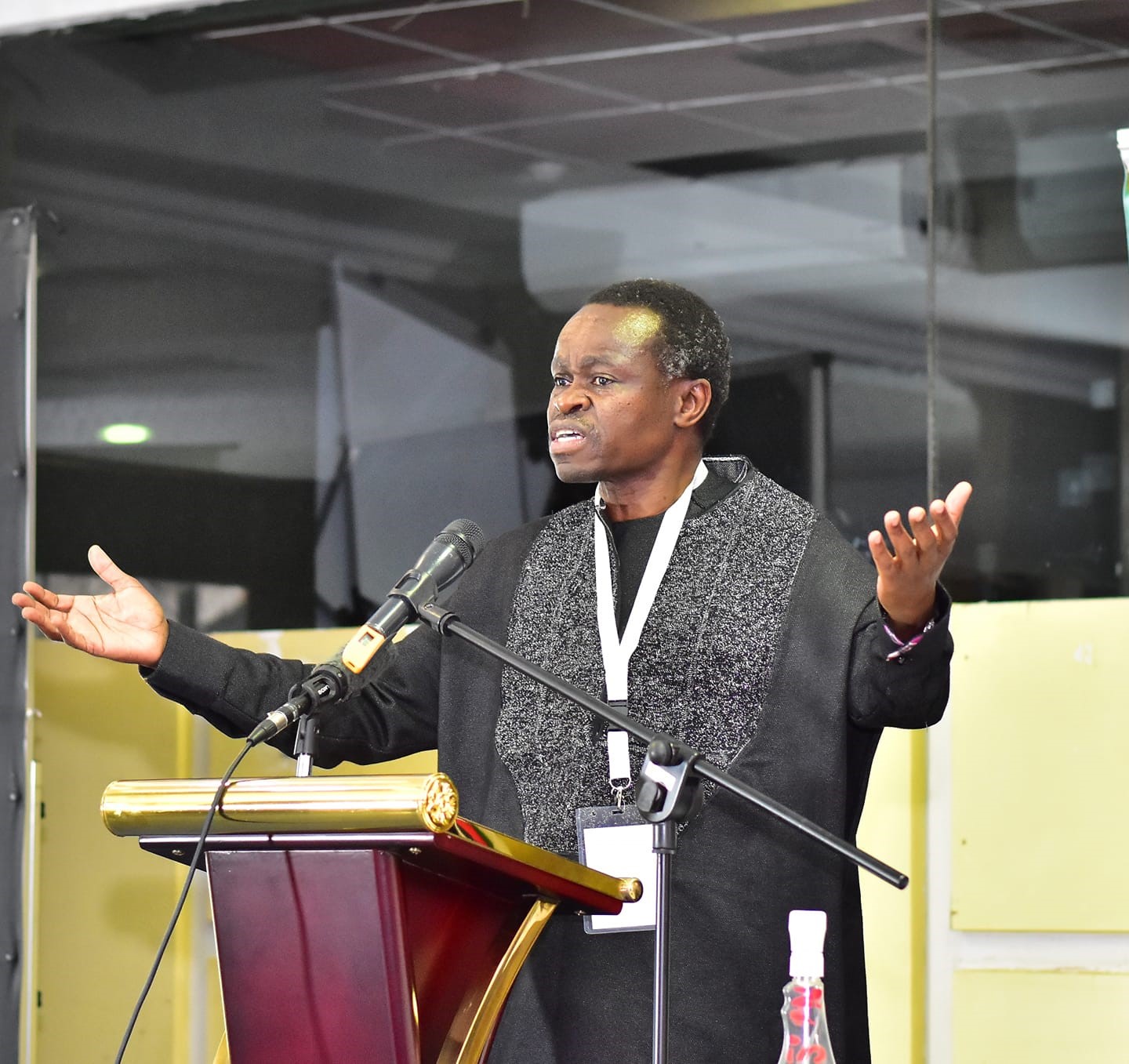
When asked why military coups are increasingly becoming the default method of resolving political disputes in Francophone Africa, Kenyan legal scholar and pan-African activist Prof. Patrick Loch Otieno Lumumba offers a blunt diagnosis. Many of the countries experiencing political upheaval, he argues, are still deeply influenced by Paris. This creates systems where outcomes are predictable, dissent feels futile, poverty deepens and political elites grow more insulated and wealthier. In such an environment, he says, citizens feel powerless, the ballot loses meaning, and the military begins to imagine itself as the only force capable of interrupting corrupt rule.
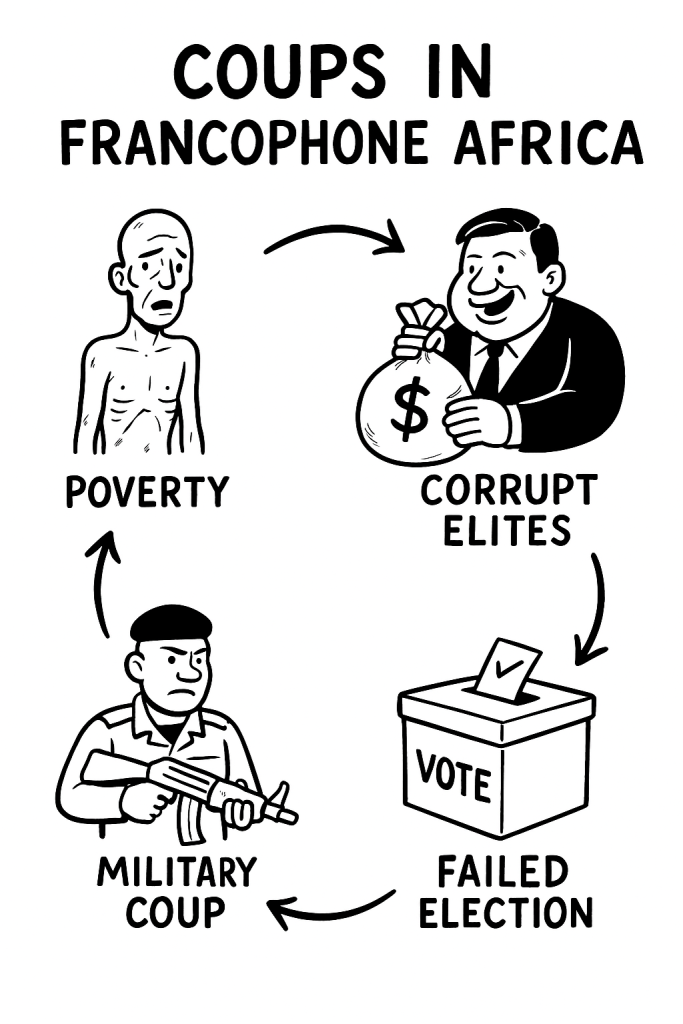
Lumumba believes this disillusionment is at the heart of the region’s coup wave. “The ballot has failed,” he says sharply. “People are becoming poorer and poorer, politicians are becoming richer and more arrogant, and voter apathy is the public’s way of saying, ‘We are tired.’” The military, he adds, interprets this public exhaustion as a mandate. Soldiers see themselves as saviours because they are organized, armed and embedded in society. Yet, he warns, coup makers often repeat history: in the early days they promise reform, but soon enough “they discard their uniforms, wear suits, and repeat the same mistakes.”
His words capture the mood in a region that has become the global epicentre of military takeovers. Since 2020, Francophone Africa has witnessed a cascade of coups, at least ten successful overthrows stretching from the Sahel to Central and West Africa, and even as far as Madagascar. Mali experienced two coups in rapid succession. Guinea’s long-serving president was toppled by a colonel who dissolved the constitution within hours. Burkina Faso saw two takeovers within a year. Niger’s president was detained by his own guard. Gabon’s Bongo dynasty fell after 56 years in power. Madagascar’s leader was removed after a bitter dispute over term limits. Guinea-Bissau’s electoral process collapsed into a military seizure of power. And in December 2025, Benin narrowly escaped joining the list when ECOWAS forces intervened within hours of an attempted putsch.
The motivations differ from country to country, but common themes run through the region. Poverty is deepening while political elites remain entrenched. Youth unemployment is soaring, especially in the Sahel. Jihadist violence has displaced millions. Food insecurity affects tens of millions. And in some resource-rich states, citizens watch minerals enrich elites rather than transform lives. Lumumba’s contention that people are “getting poorer while leaders get richer” is echoed by economists and civil society groups across West and Central Africa.
One of the most sensitive and explosive themes is the question of France’s lingering influence. In many Francophone states, France remains woven into monetary systems, military operations and political alliances. Critics describe this as a modern continuation of colonial power, one that shapes policy, shields allies and frustrates reform. The recent wave of coups has been accompanied by increasingly vocal anti-French sentiment. Mali, Burkina Faso and Niger have expelled French troops, closed French military bases and embraced new foreign partners, especially Russia. Street celebrations in these countries have often included the waving of Russian flags, a symbolic rejection of France as much as an embrace of alternative powers.
As the political map shifts, Africa’s major regional bodies have been thrust into crisis. ECOWAS, once seen as the continent’s most assertive pro-democracy bloc, has struggled to maintain credibility. It suspended and sanctioned coup states, deployed mediation teams and even threatened military interventions, but enforcement has been uneven. Its most dramatic moment came in 2025 when it rushed troops to Benin to prevent a takeover, backed by Nigerian airstrikes. Yet ECOWAS has also fractured: Mali, Burkina Faso and Niger withdrew from the bloc in 2025, forming the Alliance of Sahel States (AES), a rival coalition that openly defends military juntas and rejects ECOWAS pressure.
The African Union, which automatically suspends countries whose governments are deposed, has also grappled with declining leverage. It continues to condemn coups, impose targeted sanctions and send envoys, but its efforts have struggled against the rising tide of military rule and shifting geopolitical loyalties. Meanwhile, the Community of Sahel-Saharan States has aligned itself more closely with the junta-led AES, favouring sovereignty narratives over democratic norms. With parts of the continent now backing coups and others fighting them, Africa’s political landscape has become more fragmented than at any point in the past two decades.
The deeper question, however, concerns democracy itself. In many of these countries, citizens no longer believe the existing democratic systems ever truly represented them. Elections are seen as heavily manipulated, constitutions amended to entrench ruling elites, courts captured, and opposition movements routinely repressed. Lumumba’s assertion that “the ballot is no longer an avenue that can guarantee genuine change” reflects a widespread sentiment that democracy has become procedural rather than meaningful.
What comes next is uncertain. Lumumba cautions that soldiers who seize power as saviours often become authoritarian rulers themselves. The challenge, he argues, is not merely stopping coups, but reconstructing systems that can restore public trust: independent institutions, genuine accountability, economic reforms that lift people from poverty, and a political culture liberated from both domestic corruption and external influence.
For now, Francophone Africa is at a crossroads. Coups have become expressions of widespread frustration, but they have also accelerated instability. Whether the region moves toward deeper military rule, renewed civilian democracy, or new hybrid forms of governance will depend on whether leaders — military and civilian — confront the underlying grievances that Lumumba and others have long warned about. Until then, the cycle of coups may continue, not as anomalies, but as symptoms of democracies that have stopped functioning for the people they claim to represent.