Zimbabwe’s economic rebound in 2025 is not confined to trade balances alone. Beneath the headline export gains, fresh data from the Buy Zimbabwe 2025 Import and Export Trade Analysis Report reveals a shifting structure of domestic production, with mining and manufacturing emerging as the principal drivers of growth in the third quarter.
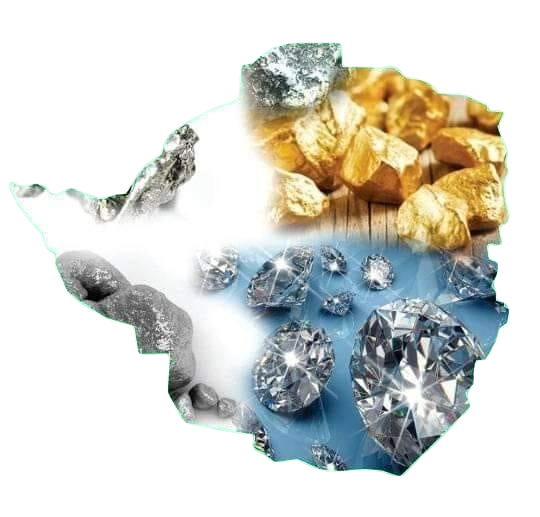
According to the report’s analysis of Sectoral GDP Contributions for Q3 2025, mining and quarrying once again anchored Zimbabwe’s output, supported by strong performances in gold, nickel and ferro-alloy production. Manufacturing followed closely, reflecting expanded semi-processing of minerals and growth in agro-industrial activity.
The alignment between GDP performance and trade data is striking. Semi-manufactured exports — particularly gold — accounted for nearly half of total export earnings in 2025. That surge appears to have translated directly into higher domestic value-added output during the third quarter.
Mining’s dominance is hardly new in Zimbabwe’s economic story. For decades, the country has relied on its vast mineral reserves — gold, platinum group metals, chrome and nickel — to generate foreign currency. What distinguishes 2025, however, is the increasing contribution of semi-processing rather than purely raw extraction, signaling gradual movement up the value chain.
Manufacturing’s elevated position in Q3 also reflects spillover effects from both mining and agriculture. Agro-processing, food production and basic industrial fabrication contributed to output expansion, even as the country continues to import significant volumes of finished consumer and capital goods.
Agriculture, while traditionally central to Zimbabwe’s economy, displayed mixed dynamics during the quarter. Tobacco remained a strong export performer, yet agricultural GDP contributions were tempered by input dependencies — particularly fertilizer and fuel imports — that continue to limit full domestic value capture.
Meanwhile, services sectors — including wholesale and retail trade, transport and financial services — benefited indirectly from stronger export flows and rising industrial activity, reinforcing the interconnected nature of Zimbabwe’s growth structure.
The third-quarter data suggests that Zimbabwe’s economic expansion in 2025 has been production-led rather than consumption-driven. Output in mining and manufacturing has underpinned export gains, helping narrow the trade deficit to its lowest level in five years.
Yet the composition of GDP also highlights the country’s unfinished industrial agenda. Capital goods imports — particularly machinery and vehicles — remain substantial, indicating continued reliance on foreign technology and equipment. Bridging that gap will require deeper industrial integration, local machinery assembly and expanded downstream processing.
For policymakers, the Q3 sectoral snapshot offers both reassurance and challenge. The reassurance lies in the fact that core productive sectors are generating measurable value. The challenge lies in converting that momentum into diversified, high-value industries capable of sustaining long-term growth.
If the third quarter is indicative of a broader trend, Zimbabwe’s economy may be gradually recalibrating — shifting from a model dominated by raw exports toward one increasingly defined by domestic production and semi-processing. Whether that transition accelerates will shape not only future GDP figures, but the country’s broader economic resilience in an unpredictable global environment.