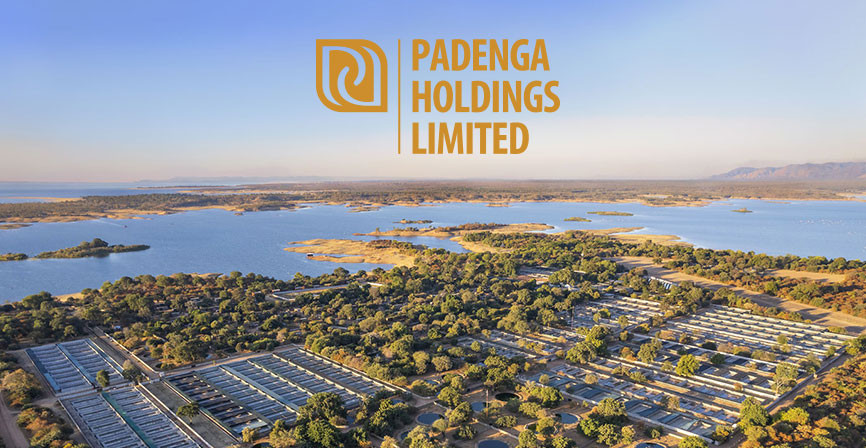
In a strategic move aligning with the government’s call for corporate self-electrification, Padenga Agribusiness is leveraging its 1.2-megawatt grid-tied solar plant to reduce reliance on the national grid and mitigate Zimbabwe’s chronic power deficits.
CEO Gary Sharp recently highlighted the company’s innovative approach, describing the solar facility as a symbiotic partnership with the Zimbabwe Electricity Supply Authority (Zesa), effectively using the utility as an “energy bank.” During daylight hours, Padenga feeds surplus power into the national grid, offsetting this against nighttime consumption when solar generation ceases, a practice facilitated by net metering regulations.
This initiative comes as Energy and Power Development Minister July Moyo continues to urge companies, especially large-scale operators, to invest in their own power generation infrastructure. Speaking last month, Moyo emphasized that self-electrification by corporations would “lessen the pressure on the country” and “attract more investments” by ensuring a more stable electricity supply.
His remarks underscore a broader national strategy to address Zimbabwe’s electricity supply-demand imbalance, where installed capacity struggles to meet soaring demand.
Zimbabwe’s power sector faces significant challenges, with the World Bank’s latest Economic Update revealing that power shortages cost the economy 6.1% of GDP annually, including 2.3% from generation inefficiencies and network losses, and 3.8% from downstream costs of unreliable energy. In 2020, peak demand reached 1,900 MW, while available generation capacity was only 1,585 MW, leading to rolling blackouts of 12–14 hours daily. Although the government commissioned an additional 600 MW at the Hwange power station in 2023, the total installed capacity remains insufficient, with actual generation often hovering around 1,500 MW against a projected demand of 4,000 MW by 2030, according to the Zimbabwe Investment Development Agency (ZIDA).
Padenga’s solar plant, contributing 1.2 MW, is part of a growing trend among Zimbabwean firms adopting renewable energy to achieve energy self-sufficiency. Other companies, such as Ariston, Tanganda Estates, and Econet, have also invested in solar projects, with capacities ranging from 0.6 MW to 1.8 MW, feeding into the grid via net metering. Collectively, these independent power producers (IPPs) have an installed capacity exceeding 100 MW, contributing roughly 6% to the national electricity supply, excluding large-scale hydropower from Kariba. The Zimbabwe Energy Regulatory Authority (ZERA) reports that renewable energy, primarily solar, now accounts for about 145 MW fed into the grid, a modest but critical step toward the government’s target of 600 MW from IPPs by 2030.
Regionally, Zimbabwe’s efforts mirror trends in Southern Africa, where countries like Zambia and South Africa are also grappling with power shortages but have made strides in self-electrification. Zambia, for instance, boasts a surplus of 1,000 MW in hydropower capacity, exporting excess to neighbors, yet rural electrification remains low at 5%. South African firms, facing load shedding since 2008, have increasingly turned to rooftop solar and cogeneration, with electricity costs rising 720% between 2008 and 2023, incentivizing self-generation. Globally, corporations in developed markets like Germany and the United States are integrating microgrids and battery storage systems, achieving near-total energy independence while selling excess power back to utilities, a model Zimbabwean firms like Padenga are beginning to emulate.
Padenga’s approach not only alleviates grid pressure but also positions the company as a model for sustainable business practices in a region where power outages threaten economic growth. With Zimbabwe aiming to boost its electrification rate to 85% by 2030 and tap into its 39.5 GW solar potential, as noted by ZERA, such corporate initiatives could be a game-changer. However, challenges like capital constraints, regulatory risks, and aging infrastructure persist, requiring continued government support and private investment to close the supply-demand gap and transform Zimbabwe into a potential net exporter within the Southern African Development Community (SADC) region.