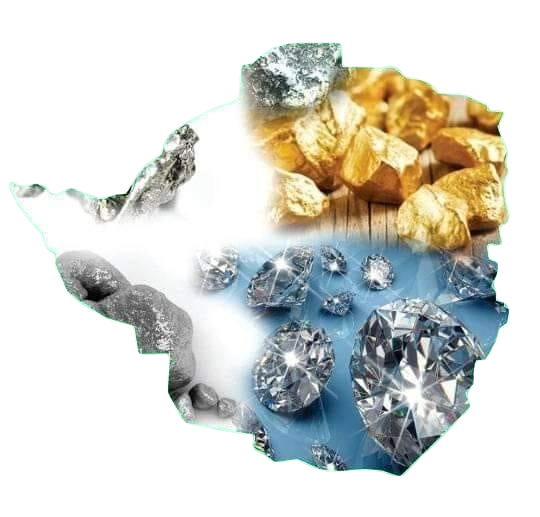
Zimbabwe is earning billions from its gold, tobacco and minerals. Yet it is also paying millions to buy back the very finished products those same raw materials help create abroad.
The Buy Zimbabwe 2025 Import and Export Trade Analysis Report lays bare a structural contradiction at the heart of the country’s economy: Zimbabwe exports raw and semi-processed commodities at scale, but imports higher-value finished goods made from those same resources — creating what analysts describe as a persistent “value gap.”
In 2025, Zimbabwe exported more than $4.6 billion in semi-manufactured gold, alongside significant volumes of platinum and other precious metals. Yet the country imported over $56 million in jewellery and luxury goods, products that could theoretically be crafted from its own mineral wealth.
The pattern repeats in tobacco. Zimbabwe exported roughly $1.3 billion in unmanufactured tobacco, reinforcing its status as one of the world’s leading leaf suppliers. But it simultaneously imported more than $100 million in finished cigarettes and tobacco products — effectively exporting raw leaf and re-importing branded value.
The imbalance is even more pronounced in industrial metals. Zimbabwe exported nearly $1.9 billion in nickel mattes, chromium ores and semi-processed iron and steel products. Meanwhile, it imported more than $2.2 billion in machinery, vehicles and finished metal goods. The country’s raw and semi-processed metals feed global manufacturing lines — only for finished industrial equipment to return at a higher cost.
Agriculture reflects a similar cycle. While Zimbabwe exported cereals, oilseeds and raw cotton worth hundreds of millions of dollars, it imported close to $195 million in processed foods, beverages and cereal-based products. Grain leaves the country in bulk; packaged flour, pastry goods and edible oils return in branded form.
Energy and chemicals represent the most striking disparity. Zimbabwe exported modest volumes of coke and electrical energy, yet imported approximately $2.5 billion in mineral fuels, fertilizers and pharmaceuticals. Fuel dependence alone remains the single largest structural vulnerability in the trade account.
The report frames these dynamics not as failure, but as opportunity.
Each value gap represents a potential industrial corridor waiting to be built: local jewellery fabrication for precious metals; expanded cigarette and tobacco processing plants; machinery assembly tied to domestic steel production; fertilizer manufacturing anchored to mining inputs; agro-processing hubs converting grain into flour, edible oils and consumer goods.
The narrowing of Zimbabwe’s overall trade deficit in 2025 — to $404 million, the lowest in five years — demonstrates the country’s capacity to generate foreign currency when exports perform strongly. But long-term resilience, the report argues, will depend less on how much Zimbabwe exports, and more on how deeply it processes what it produces.
If value addition accelerates, Zimbabwe could shift from being primarily a supplier of raw materials to a producer of finished goods — retaining more income, creating jobs and insulating itself from commodity price volatility.
The wealth is already being extracted from the soil. The question now is whether the next phase of economic transformation will ensure that more of that wealth is finished, branded and exported — not imported back at a premium.