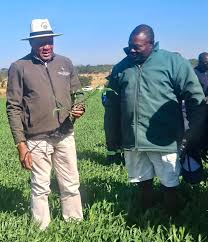
The government has ring-fenced 150 megawatts of electricity to support Zimbabwe’s 2026 winter wheat production programme, as authorities move to guarantee stable power supplies for irrigation during the critical farming season.
Lands, Agriculture, Fisheries, Water and Rural Development Minister Dr. Anxious Masuka confirmed the development, saying the power allocation is part of broader planning with the Ministry of Energy and Power Development to ensure farmers can meet production targets.
The 2026 Winter Plan aims to produce 662,000 tonnes of wheat, which is expected to exceed the country’s projected national consumption of 615,000 tonnes.
Speaking on the preparations, Masuka said discussions with the energy ministry have focused on ensuring electricity availability for winter irrigation.
“We have had discussions with the Minister of Energy and Power Development and clearly discussed the availability of power,” said Masuka.
He noted that the country had recently experienced an extended period without power cuts, reflecting improved electricity generation and management.
“We heard from the Minister responsible that we had one of the longest stretches without power cuts over the Christmas period, and we were told that there is currently no-load shedding because there is no power deficit,” he said.
Masuka said the 150MW allocation for winter wheat irrigation has been consistently ring-fenced since 2023, helping farmers maintain productivity during the winter cropping season.
“We require 150 megawatts of power to be ring-fenced for winter production and this has been happening over the past few years,” he said.
The minister added that government planning is based on improving wheat self-sufficiency and reducing reliance on imports. Zimbabwe’s projected 662,000 tonnes of wheat production this year would comfortably cover the country’s annual requirement of 615,000 tonnes, which includes some imports.
Masuka said wheat consumption has also been rising as the grain becomes more widely available in the market.
“As we make wheat more available, it is becoming another major source of starch for many households,” he said, adding that the power sector continues to prioritise the agricultural sector to sustain production.
Zimbabwe has significantly increased winter wheat output in recent years through irrigation support, improved financing mechanisms and coordinated power supply for farmers.