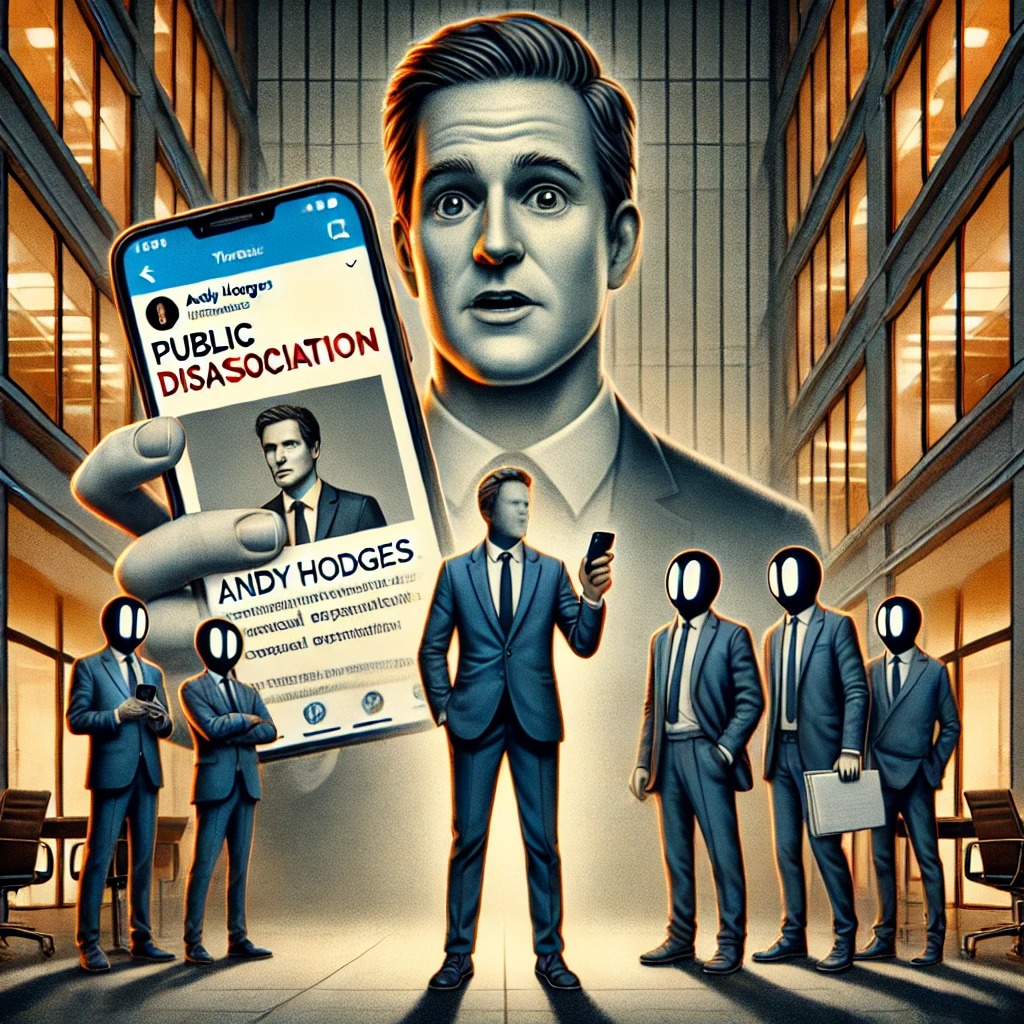
A public fallout has erupted between Zimbabwe Newspapers (1980) Limited (Zimpapers) and its former employee, Andy Farayi Hodges, following the company’s decision to issue a notice publicly disassociating itself from him. The notice, which appeared in national newspapers, declared that Hodges was dismissed from Zimpapers Television Network (ZTN) on December 9, 2024, and that his appeal against the decision had been rejected on January 21, 2025. It further stated that he no longer represented the company in any capacity and that Zimpapers would not be responsible for any dealings or statements made by him.
Rather than silencing him, the public announcement has only fueled controversy, prompting Hodges to launch a scathing response on social media. Taking to X (formerly Twitter), he accused Zimpapers of dodging critical governance issues and avoiding public accountability. He raised concerns about the financial management of the company, questioning how much it was spending on salaries and terminal benefits for three top executives (the group chief executive officer ,Mr. Pikirayi Deketeke; the chief finance officer, Mr. Farai Matanhire; and the chief marketing officer, Mr. Tapuwa Mandimutsira) who were recently placed on garden leave. He also demanded clarity on whether irregularities found in an internal audit contributed to their removal and whether the company intended to conduct a forensic audit to investigate potential financial misconduct.
Hodges went further, referencing media reports that suggested senior management had abused the executive car scheme, and he called for transparency regarding the financial stability of ZTN. He questioned whether the television network, which has struggled financially since its inception in 2019, had received a USD 6 million bailout but would still be bankrupt if it were operating independently. He also criticized the company for its continued losses and demanded to know whether there were plans to restructure its leadership. His criticism extended to wage disparities within Zimpapers, highlighting allegations that executives had been allocated top-of-the-range luxury vehicles while denying employees what he termed “uneconomic wages.”
His pointed remarks have sparked wider concerns about Zimpapers’ governance, with observers questioning the board’s silence on the pressing issues he raised. As a publicly listed and partially state-owned entity, the media house is expected to uphold financial transparency and accountability.