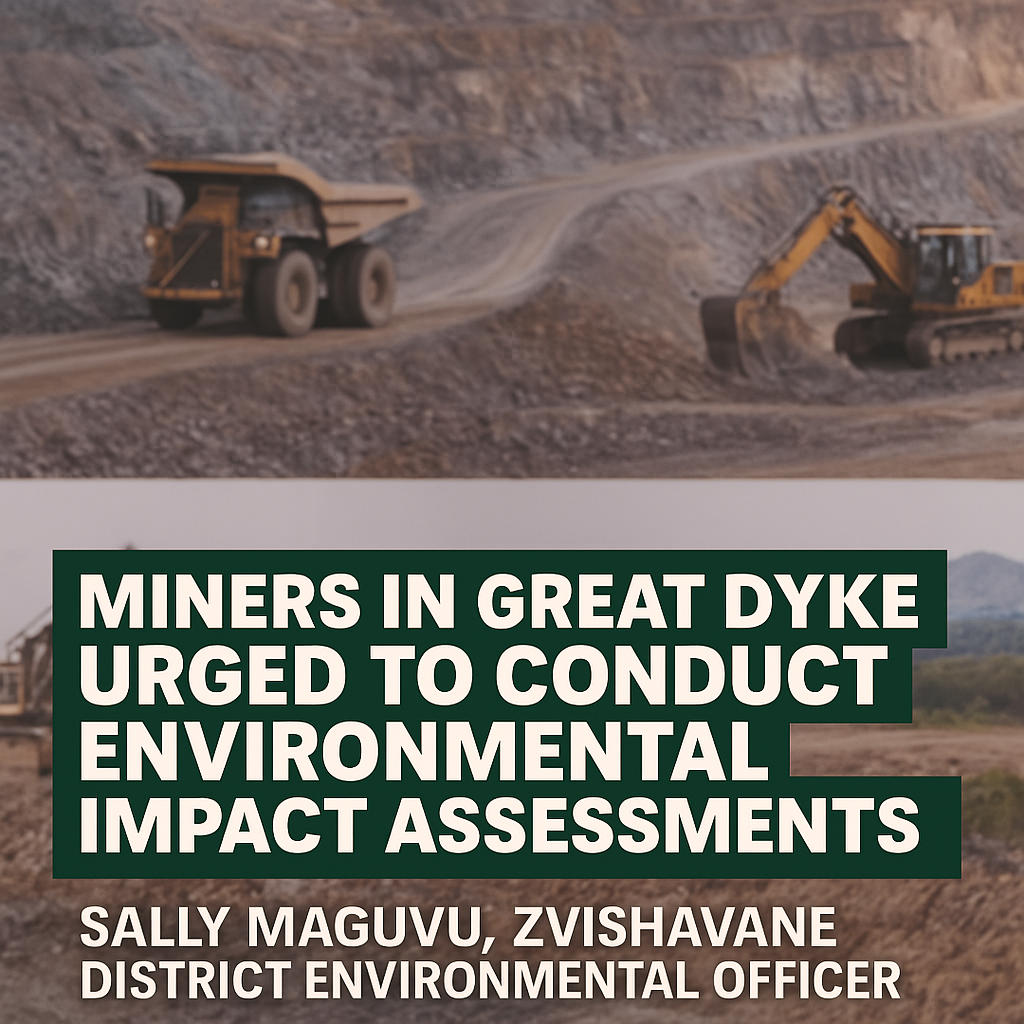
The Environmental Management Agency (EMA) has called on miners operating in the mineral-rich Great Dyke to adhere to the provisions of the Environmental Management Act [Chapter 20:27] by conducting Environmental Impact Assessments (EIAs) before implementing projects. The appeal was made during the recent 2025 Minex Expo held in Zvishavane, where Sally Maguvu, the Zvishavane District Environmental Officer, highlighted widespread non-compliance among miners.
Speaking at the expo, Maguvu emphasized that many miners are registering their claims with the Ministry of Mines and immediately proceeding with project implementation without conducting the mandatory EIAs.
“Environmental Impact Assessments are critical tools that guide project implementation while ensuring the protection of the environment,” Maguvu stated. “Failing to comply not only risks environmental degradation but also undermines sustainable mining practices that are essential for the long-term health of our ecosystems and communities.”
The Great Dyke, a geological feature stretching across Zimbabwe and known for its rich mineral deposits, has been a focal point for mining activities. However, the region has also faced significant environmental challenges, including land degradation, water pollution, and deforestation, often exacerbated by unregulated mining operations. Maguvu’s remarks underscore EMA’s ongoing efforts to enforce environmental regulations and raise awareness among stakeholders in the mining sector.
The 2025 Minex Expo, a platform for small-scale miners to collaborate and share innovations, provided an opportunity for EMA to engage directly with industry players. The event, held in Zvishavane, also saw participation from the Zimbabwe Revenue Authority (ZIMRA), which stressed the importance of tax compliance alongside environmental responsibility.
Under the Environmental Management Act [Chapter 20:27], Section 97 specifically mandates that projects listed in the First Schedule, including mining activities, require an Environmental Impact Assessment. According to the Act, “Projects listed in the First Schedule are activities for which environmental impact assessment is required.” Furthermore, Section 99 outlines the contents of an EIA report, which must include an assessment of potential positive and negative impacts on the environment, mitigation measures, and plans for monitoring and compliance.
EMA’s call to action comes amid growing concerns about environmental degradation caused by artisanal and small-scale mining, particularly in areas like the Great Dyke. Previous reports have highlighted issues such as river pollution, deforestation, and the creation of hazardous waste sites due to unregulated mining practices. The agency has also launched initiatives like Operation Chikorokoza Chapera to curb illegal gold panning, which has similarly devastated large swathes of land.
Maguvu urged miners to work closely with EMA to ensure their operations align with national environmental standards. “Compliance is not just a legal requirement; it is a moral obligation to protect Zimbabwe’s natural resources for future generations,” she added.
The EMA continues to face challenges in enforcing these regulations, as noted in recent investigations, including reports of limited agency power to curb rampant pollution and land degradation. However, events like the Minex Expo provide a vital platform for education and dialogue, aiming to bridge the gap between regulatory requirements and industry practices.