Zimbabwe’s sovereign wealth fund is putting gold at the centre of a sweeping shake-up of its mining sector, dismantling a long-standing conglomerate structure in favour of commodity-focused businesses that officials say will unlock funding, accelerate production and restore lost value.
The Mutapa Investment Fund (MIF) announced on Thursday that it is abandoning its traditional holding-company model — anchored for years by Kuvimba Mining House — and reorganising its assets into standalone mineral verticals, with gold emerging as the flagship of the new strategy.
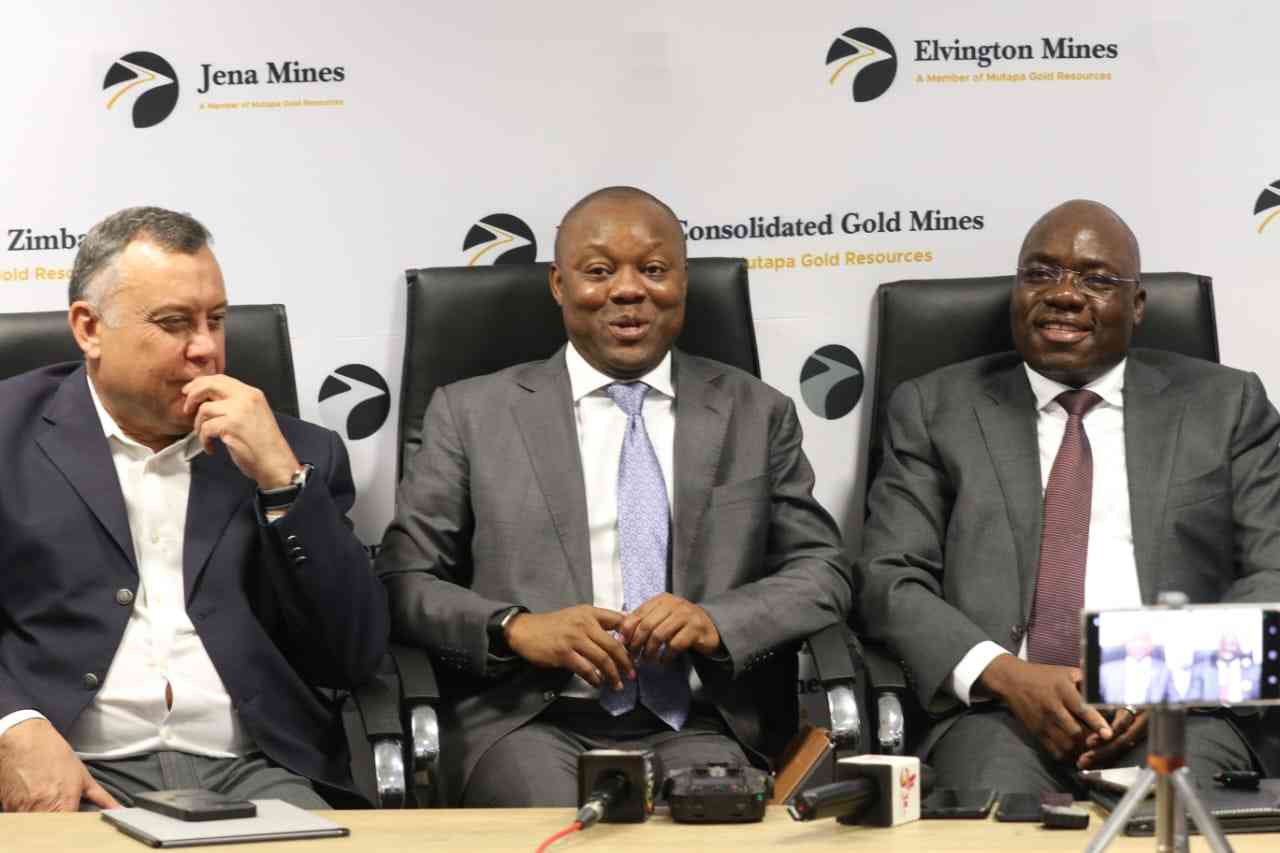
Speaking at a press conference in Harare, MIF chief investment officer Simbarashe Chinyemba said the restructuring followed a detailed internal review of governance, financial performance and operational efficiency across the fund’s mining portfolio.
“We are unveiling a comprehensive restructuring that transitions us from a broad holding model to specialised, commodity-specific verticals,” Chinyemba said. “Global evidence shows that diversified conglomerates often suffer a discount because focus is diluted. We are correcting that.”
*Gold first, funding faster*
Under the new architecture, gold operations have been ring-fenced into a dedicated vehicle, Mutapa Gold Resources, now headed by former Kuvimba chief executive Trevor Barnard. Barnard said the separation is already reshaping conversations with financiers.
“When you have a gold company sitting on its own, the funding profile changes completely,” he said. “Investors are far more willing to back a focused gold business than a diversified group where value is diluted by unrelated minerals.”
Barnard outlined plans to develop a large open-cast mine at Shamva, targeting about 2.5 million tonnes of ore per year and roughly 80,000 ounces of gold annually. Similar development is planned at Jena and other assets, with Mutapa aiming to double gold production within three to four years.
*Untangling a complex structure*
For years, Zimbabwe’s strategic mineral assets were held through a dense web of entities under Mutapa, including Kuvimba Mining House, the Industrial Development Corporation and various minority shareholders. While the structure consolidated state control, it also blurred accountability and complicated capital allocation.
“We are rationalising this structure to create a more streamlined and efficient ownership model,” Chinyemba said. “What we are doing is neither unique nor experimental. It reflects how the world’s leading mining houses organise themselves.”
Beyond gold, Mutapa has reorganised its portfolio into separate verticals covering platinum group and other precious metals, energy minerals such as lithium and nickel, and base metals. Each vertical will have its own leadership, technical focus and capital strategy aligned to commodity-specific cycles.
*Following the global playbook*
Chinyemba pointed to global precedents, including Rio Tinto, which has reorganised around core commodity units, as evidence that the industry is moving away from sprawling conglomerates toward sharper, more accountable structures.
“This allows faster decision-making in response to market volatility and ensures technical expertise is focused on the unique fundamentals of each mineral,” he said.
The overhaul underpins Mutapa’s 2026 “FIRE” strategy — Fix, Revive, Strengthen and Extract value — aimed at turning state-owned mining assets into resilient, profit-generating businesses in an increasingly volatile global market.
*A high-stakes shift*
New leadership appointments underscore the scale of the change: Godwin Gambiza will lead base metals, Barnard gold, Munashe Shava platinum, and Innocent Rukweza energy minerals. While regulatory approvals are still pending, the strategic direction is set.
By placing gold at the forefront and breaking up its mining empire, Mutapa is making a calculated bet that focus will succeed where scale alone has fallen short — and that Zimbabwe’s most historic mineral can once again anchor growth, confidence and national wealth.