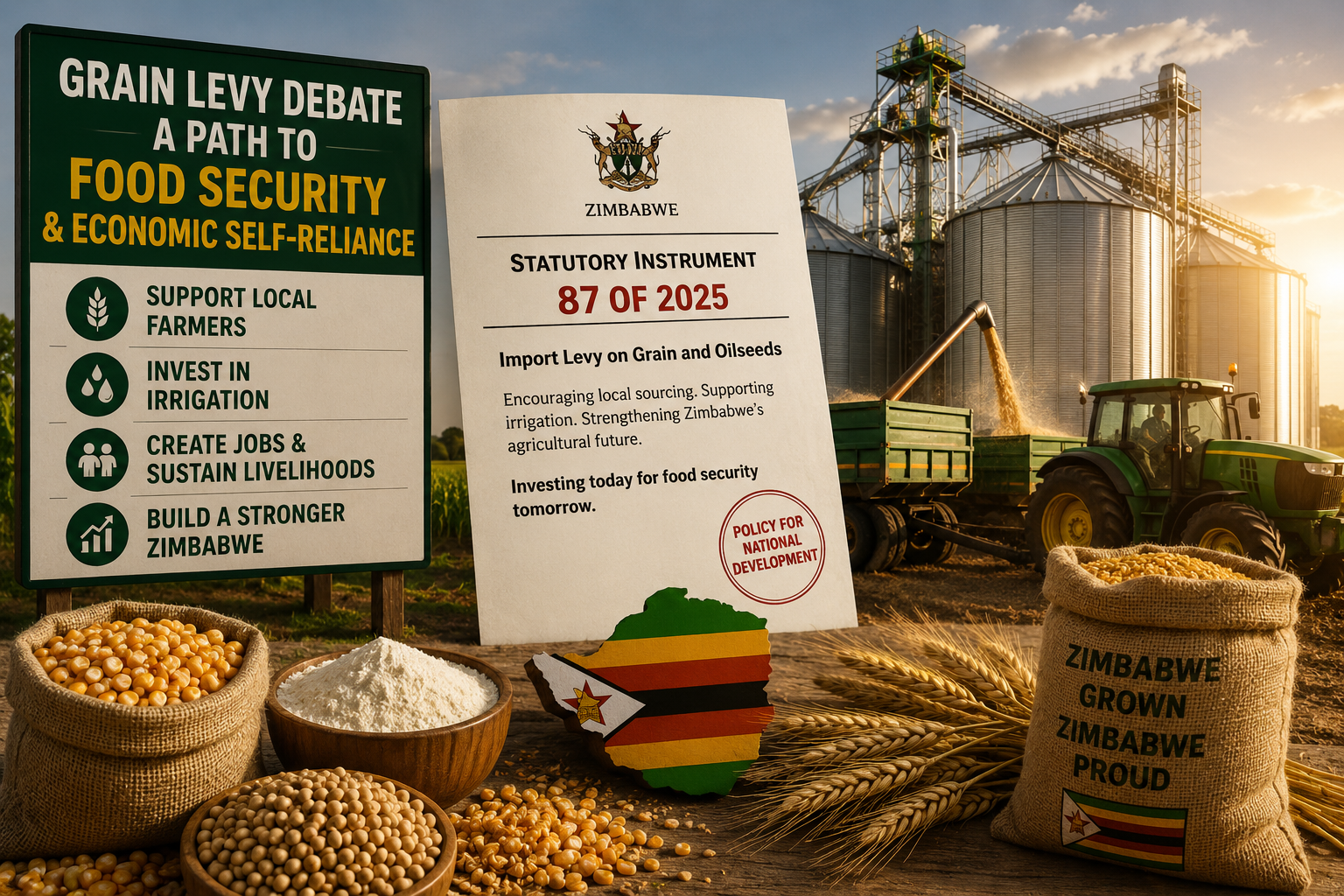
Zimbabwe’s grain import policy has drawn fresh support from indigenous millers, who have accused sections of the milling industry of pushing the country towards greater dependence on imported food at the expense of local farmers.
In a strongly worded statement, the Indigenous Grain Millers Association of Zimbabwe (IGMAZ) said attempts by the Grain Millers Association of Zimbabwe (GMAZ) to challenge grain import levies risk reversing gains made under the land reform programme and weakening domestic agricultural production.
The association argued that Zimbabwe’s growing grain import bill is unsustainable and runs counter to Government’s broader strategy of supporting local farmers and achieving food self-sufficiency.
IGMAZ also dismissed previous warnings from millers that grain shortages and bread price increases would occur if import support was not provided, noting that Government had made grain available through the Grain Marketing Board but the facility had reportedly not been fully utilised.
The organisation welcomed Statutory Instrument 87 of 2025, saying the policy had already generated approximately US$7.5 million, which has been directed towards supporting 17 irrigation schemes across the country.
The association called on Government to maintain the policy direction and take firm measures against what it described as efforts to entrench import dependence, arguing that stronger support for local agriculture remains critical to achieving Zimbabwe’s Vision 2030 development goals.
IGMAZ further urged farmers and indigenous grain millers to rally behind policies that promote domestic production and strengthen the country’s agricultural value chains.