Zimbabwe’s sovereign wealth vehicle, the Mutapa Investment Fund (MIF), has announced a far-reaching restructuring of its mining portfolio that will see the dissolution of Kuvimba Mining House (KMH) and the creation of commodity-specific mining verticals aligned to global industry practice.
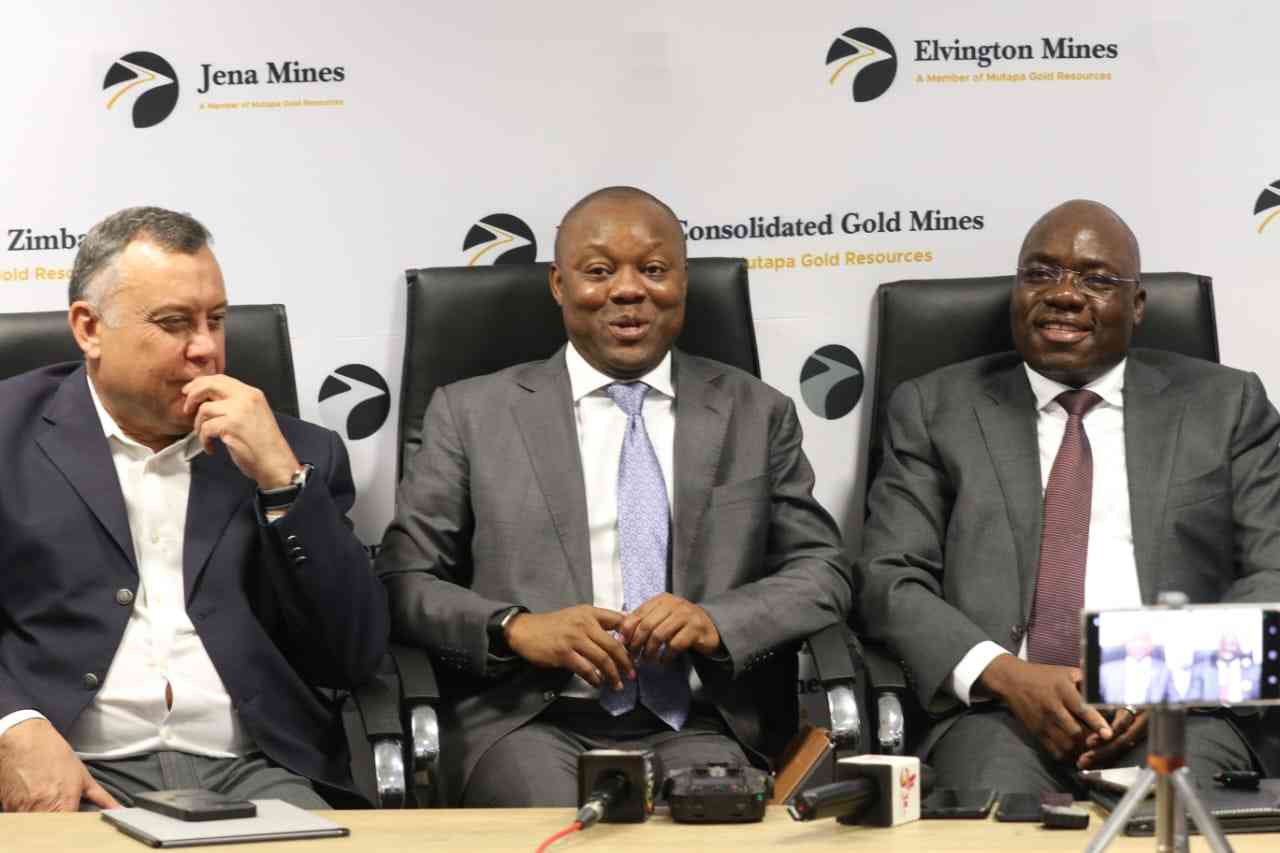
Speaking at a press conference on Thursday afternoon, MIF Chief Investment Officer Simbarashe Chinyemba said the move represents a strategic shift away from a diversified holding company model toward specialised operating platforms focused on individual mineral classes such as gold, platinum group metals (PGMs), energy minerals and base metals.
Chinyemba said the restructuring follows an extensive diagnostic review of governance, financial performance and operational efficiency across MIF’s minerals cluster. Under the previous structure, mining assets were held through what he described as a “spider web” of entities under Mutapa, with KMH acting as a diversified umbrella over gold, lithium, nickel, chrome and PGM assets.
“We are rationalising this structure to create a more streamlined and efficient ownership model,” Chinyemba said. “This is not experimental. It reflects how leading global mining houses organise themselves to sharpen focus, improve accountability and align operations with long-term shareholder outcomes.”
End of a diversified model
KMH, now fully owned by Mutapa Investment Fund following the exit of minority shareholders, has in recent years built a substantial portfolio across the mining value chain. Its assets include major gold operations such as Freda Rebecca, Shamva, Jena and Elvington; lithium production at Sandawana; nickel mining and smelting through Bindura Nickel Corporation; chrome assets under Zimbabwe Alloys; and the large-scale Great Dyke Investments PGM project in Darwendale.
However, Chinyemba argued that the breadth of this portfolio had begun to dilute focus and obscure value. Global experience, he said, shows that diversified conglomerates often trade at a “conglomerate discount”, with investors and stakeholders unable to clearly price risk and performance across unrelated commodities.
Under the new architecture, assets will be grouped into distinct commodity verticals, each with dedicated leadership, technical teams and capital allocation frameworks tailored to the specific cycles and economics of that mineral.
“The technical and economic drivers of gold mining are fundamentally different from those of lithium, coal or nickel,” Chinyemba said. “This structure allows us to calibrate capital and expertise to each commodity and to respond faster to volatile markets.”
Global precedents and local objectives
In outlining the rationale, Chinyemba cited international precedents, noting that companies such as Rio Tinto and BHP have adopted or refined commodity-focused operating models to unlock value and improve returns.
At Mutapa, the restructuring will form the backbone of its 2026 “FIRE” strategy—an acronym for Fix, Revive, Strengthen and Extract value from its portfolio. According to Chinyemba, the new structure will help identify “crown jewel” assets for accelerated investment while isolating operational and financial risks within specific commodities rather than across the entire group.
While the transition remains subject to regulatory approvals, Mutapa says the objective is to preserve and grow national wealth by ensuring its mining assets operate as resilient, efficient and transparent engines of economic development.
“It is a volatile global market,” Chinyemba said. “Clarity of purpose is our most important tool. This restructuring positions our mining portfolio to better support Zimbabwe’s long-term economic goals.”
The dissolution of Kuvimba Mining House marks one of the most significant reorganisations of Zimbabwe’s state-owned mining assets in recent years, signalling a more orthodox, globally aligned approach to managing some of the country’s most strategic mineral resources.