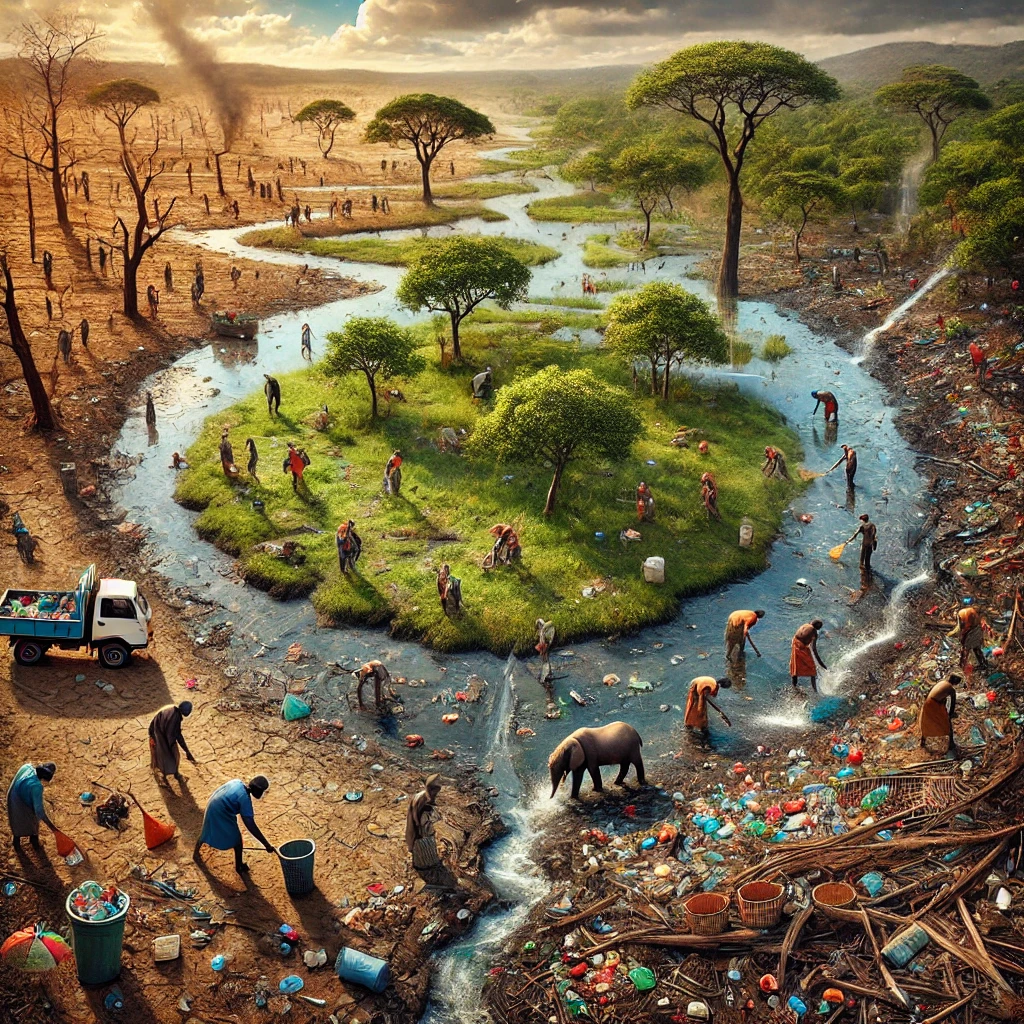
Human encroachment, poaching, and veld fires continue to pose severe threats to wetlands in Zimbabwe’s Midlands Province, jeopardizing the delicate balance of biodiversity and weakening the region’s natural flood mitigation and climate regulation capabilities. These wetlands, which are vital to both environmental health and local communities, are under increasing pressure from unsustainable practices.
According to Oswald Ndlovu, the Midlands Provincial Environmental Education and Publicity Officer, these ecosystems are experiencing significant degradation. Ndlovu emphasized that wetland habitats are being encroached upon through illegal settlements, unregulated farming, and unsustainable poaching activities. These factors undermine wetlands’ ability to function as carbon sinks and protect local communities from flooding, exacerbating the region’s vulnerability to climate change.
The Global and Local Context
Globally, wetlands cover approximately 12.1 million square kilometers, a vast expanse larger than Canada. Despite their importance, wetlands have been rapidly disappearing at an alarming rate. Since 1700, around 3.4 million square kilometers of inland wetlands have been lost, primarily due to land conversion for agriculture. This accounts for a 21% reduction in the total wetland area globally. In addition to land-use change, rising sea levels due to climate change pose an increasing threat, particularly to coastal wetlands.
Wetlands play an indispensable role in carbon storage. Peatlands, a type of wetland, store 50 times more carbon than tropical rainforests, while coastal wetlands such as mangroves sequester carbon at rates up to 55 times faster than rainforests. These critical ecosystems not only combat climate change but also support unparalleled biodiversity. Wetlands are among the most biologically diverse ecosystems globally, home to migratory birds, mammals, and a wide variety of fish species.
In Zimbabwe, wetlands cover around 11,700 square kilometers, roughly 3% of the country’s total surface area. However, local wetlands are facing increasing degradation. A staggering 61% of Zimbabwe’s wetlands are classified as moderately degraded, with 18% severely degraded. This degradation is largely attributed to uncontrolled agricultural expansion, settlement, and the overuse of wetland resources, which has led to the deterioration of wetland health.
World Wetlands Day Commemoration
On February 13, 2025, the Midlands Province will mark World Wetlands Day at the Nyororo Wetland in Mberengwa. This event aims to raise public awareness about the importance of wetlands and the urgent need for sustainable management to preserve these vital ecosystems. The theme will focus on the critical need for conservation efforts to safeguard wetlands for both present and future generations.
The significance of wetlands to the province cannot be overstated. These areas provide essential services, including clean water, food, and ecological stability. Wetlands also contribute to mitigating climate change, acting as natural carbon sinks and reducing the impact of flooding through water retention. In the Midlands, the loss of wetlands could lead to greater instability, affecting local farming practices and the region’s biodiversity.
Conservation Efforts and Challenges
Zimbabwe has seven designated Ramsar sites, wetlands recognized for their international importance under the Ramsar Convention. These sites represent a commitment to global wetland conservation; however, local efforts have been hindered by inconsistent enforcement of protection laws. Ndlovu noted that although national policies and guidelines exist to protect wetlands, their implementation often falters due to a lack of resources and political will.
As part of the commemoration, the Midlands Province will spotlight the importance of sustainable practices, including promoting wetland restoration and enhancing community participation in conservation. The pilot event aims to educate local communities on the ecosystem services provided by wetlands, from their role in food security to their ability to support biodiversity and regulate the local climate.
Experts have in the past emphasized that while agricultural activities like small-scale farming in dambos have potential without causing significant environmental damage, the current practice of over-exploitation has contributed to wetland degradation. To safeguard the long-term health of these ecosystems, more sustainable agricultural methods must be adopted, alongside stronger community-based conservation efforts.