Table of Contents
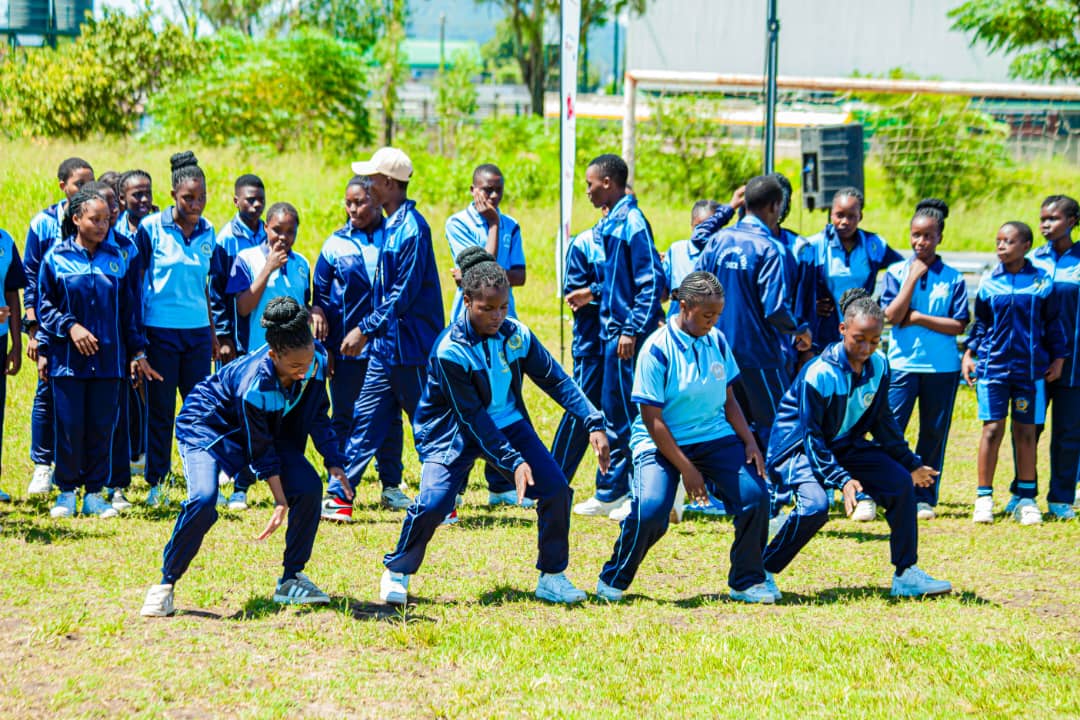
Zvishavane, Zimbabwe — Beneath the blazing Midlands sun, the future of Zimbabwe’s economy unfolded not in a mine shaft or a factory floor, but in a schoolyard.
At the 2026 Schools and Innovation Fair in Zvishavane, educators, industry leaders and policymakers converged around a shared concern: how to prepare a generation for a world where machines are increasingly doing the work humans once did — and where the rules of opportunity are being rewritten in real time.
From automation and artificial intelligence to mining and entrepreneurship, the message was both urgent and expansive. The world is changing — fast — and Zimbabwe cannot afford to be left behind.
“We must begin to ask ourselves: what are we preparing our children for?” said Mrs. Ashell Ruswa, CEO of Errymaple Group of Schools, addressing learners and teachers gathered at Gresham Grounds. “Many of the jobs we know today may not exist in 15 or 20 years.”
Her warning is echoed far beyond Zimbabwe. Across advanced economies, nearly 28% of jobs are at high risk of automation, according to the Organisation for Economic Co-operation and Development, as artificial intelligence expands from routine tasks into decision-making roles.
In the United States, a recent study projects that more than 9 million workers could be displaced by AI within five years, underscoring how rapidly disruption is unfolding.
And in Africa, where youth unemployment is already a structural challenge, the stakes may be even higher. By 2030, up to 100 million young Africans could struggle to find work, with automation among the contributing factors, according to development forecasts.
A generation at risk — and at opportunity
Yet if the warnings were stark, the tone in Zvishavane was not defeatist. Instead, speakers framed the moment as a turning point — one that could either deepen inequality or unlock new pathways for growth.
Ruswa urged a radical shift in education, away from memorization and toward skills that machines cannot easily replicate: critical thinking, empathy, creativity and practical problem-solving.
“In this century, we are not lecturers — we are facilitators,” she said. “We must allow learners to discover, to innovate, to think.”
That argument aligns with global research suggesting that while automation threatens routine jobs, it also increases demand for roles requiring non-routine cognitive and human-centered skills.
The challenge, experts say, is speed: whether education systems can evolve quickly enough to match technological change.
The gender gap in a digital future
For young women, the transformation carries both promise and risk.
Globally, 20% of women’s jobs could be displaced by automation by 2030, affecting more than 100 million workers, according to a McKinsey & Company analysis.
Some studies suggest the impact could be even more uneven. In Africa, tasks typically performed by women are about 10% more susceptible to automation, raising concerns that existing inequalities could deepen if interventions lag.
At the Zvishavane fair, that reality shaped a parallel message: inclusion is no longer optional — it is economic necessity.
Standing before a crowd of students, Ruvimbo Kadenhe, secretary general of the Women in Gemstones Association of Zimbabwe (WIGAZ), called on girls to claim their place in one of the country’s most strategic industries.
“Mining is a business,” she said. “There are many careers — engineers, geologists, environmental specialists, entrepreneurs. You belong in this space too.”
Mining’s new frontier
Zimbabwe’s mining sector — long a pillar of export earnings — is itself undergoing transformation. Once defined largely by extraction, it is increasingly shaped by technology, value addition and global supply chains.
Kadenhe described an industry expanding beyond traditional roles, with opportunities in everything from mineral processing to jewelry design.
“It is no longer just about digging,” she said. “It is about innovation, knowledge and creating value.”
Her remarks reflect a broader global shift. As demand rises for critical minerals used in batteries and renewable energy systems, mining is becoming more technologically sophisticated — and more skills-intensive.
At the same time, international research shows that women remain underrepresented across mining value chains, facing barriers ranging from access to finance to workplace discrimination.
Bridging that gap, Kadenhe argued, could have ripple effects beyond the industry itself.
“When women are empowered economically, families become more stable. Communities develop,” she said.
Education meets industry
The convergence of these themes — automation, inclusion and industrialization — has placed Zimbabwe’s education system under growing scrutiny.
Ruswa pointed to the country’s Education 5.0 framework, which emphasizes innovation and hands-on learning, as a step in the right direction. Initiatives such as robotics training and partnerships with international institutions are beginning to take shape, aimed at equipping students with future-ready skills.
But she warned that deeper cultural shifts are needed — including among parents.
“Straight A’s alone will not secure the future,” she said. “There must be a balance with practical skills and creativity.”
At the fair, that philosophy was visible in real time. Students explored robotics kits, engaged with mining companies and interacted with professionals across sectors — a glimpse of an education model rooted in application rather than abstraction.
Competing in a changing world
For Zimbabwe, the stakes extend beyond classrooms.
Automation is reshaping global value chains, making economies more knowledge-intensive and less reliant on low-skilled labor.
Countries that fail to adapt risk falling further behind; those that invest in skills and innovation may find new opportunities.
The World Economic Forum has outlined multiple possible futures for the global labor market, warning that only scenarios combining technological progress with strong investment in skills will avoid widespread disruption.
In Zvishavane, those global dynamics felt immediate.
Students — many from communities shaped by mining and agriculture — were being asked to imagine careers not only within those sectors, but beyond them: as engineers, innovators, entrepreneurs.
“Do not limit your dreams to what you have seen,” Kadenhe told them. “Expand them to what is possible.”
A narrow window
The question now is whether Zimbabwe can move quickly enough.
Technology is advancing at what Ruswa described as an “alarming rate,” reshaping industries faster than institutions can respond. Each delay in reform — in curriculum, training, or inclusion — risks widening the gap between preparation and reality.
But the gathering in Zvishavane suggested a growing recognition of that urgency — and a willingness to act.
If the future of work is being rewritten, then here, in a schoolyard in the Great Dyke, Zimbabwe is beginning to draft its own response.
And for the students listening — especially the girls being told they belong in spaces once closed to them — the stakes are not abstract.
They are personal.