Zimbabwe is on course to record another bumper winter wheat harvest in 2025, consolidating its position as one of only two African countries that have achieved self-sufficiency in the strategic grain.
According to a press statement issued by the Minister of Lands, Agriculture, Fisheries, Water and Rural Development, Dr. Anxious Jongwe Masuka, the country has already harvested 518,659 metric tonnes of wheat from 95,560 hectares. A further 27,006 hectares are yet to be harvested from the total 122,566 hectares planted this season.
When completed, the total output is expected to surpass last year’s record of 562,091 metric tonnes, representing a 227 percent increase from the 2017 harvest of 158,515 metric tonnes.
“Zimbabwe is poised to register another record wheat production during the 2025 season,” Dr. Masuka said. “We are one of only two jurisdictions on the African continent that have become wheat self-sufficient.”
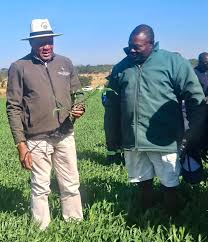
The minister confirmed that current production already exceeds the country’s annual national requirement of 360,000 metric tonnes, creating room for exports.
“Zimbabwe is currently seeking export markets for its wheat, in the region and beyond,” he said.
Dr. Masuka emphasized that there was no need to import wheat for general consumption. However, he noted that some millers preferred wheat with a higher gluten content, which is not produced locally. Such imports, he explained, would continue under existing government arrangements and approvals, with no new costs or restrictions.
He said the government remained focused on the “availability, accessibility, and affordability” of agricultural commodities, which underpin the Agriculture, Food Systems, and Rural Transformation Strategy.
To maintain price and supply stability, the Grain Marketing Board (GMB) has distributed 6,518 metric tonnes of wheat to various millers over recent weeks. This intervention, Dr. Masuka said, had contributed to the stability of wheat product prices, including bread.
“The current wheat products price stability is partially attributable to this timely intervention. This must continue,” the minister said.
Dr. Masuka urged registered millers, in terms of the Agricultural Marketing Authority Act (Chapter 18:24), to approach the government for assistance in sustaining wheat supply and market equilibrium.
He also took the opportunity to congratulate the 16,362 farmers who produced wheat during the 2025 season, acknowledging their contribution to national food security.
“I acknowledge and appreciate the efforts of the various enablers, and the productive, inclusive and participatory whole-of-sector approach adopted since the advent of the Second Republic,” he said. “This coalition of forward-looking Zimbabweans, for progress, will always be triumphant.”
Zimbabwe’s growing wheat output has been a major highlight of the Second Republic’s agricultural recovery drive, supported by expanded irrigation, contract farming, and mechanisation initiatives.
The 2025 wheat season’s success now sets the stage for the country to explore export opportunities, potentially transforming Zimbabwe from a wheat importer into a regional supplier.