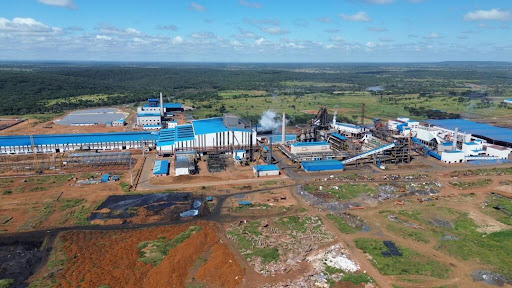
ZANU PF Secretary for Information, Ambassador Christopher Mutsvangwa, has placed the spotlight firmly on the US$1.5 billion Dinson Iron and Steel Project in Manhize, describing it as a cornerstone of the Second Republic’s ambitious drive to rebuild Zimbabwe’s heavy industry. Speaking at a party gathering, Mutsvangwa underscored the project’s strategic importance, noting that it will not only reduce the country’s dependence on costly steel imports but also breathe new life into Bulawayo’s long-dormant industrial base.
For decades, Bulawayo was celebrated as the nation’s manufacturing hub, a city whose factories powered Zimbabwe’s economy and supplied goods across the region. Yet years of decline left its industrial corridors silent, its once-thriving plants shuttered. Mutsvangwa emphasized that the Manhize steel plant represents a modern breakthrough—one that could restore Bulawayo’s vitality and reestablish its reputation as a steel town of global standing.
“The president wants to restore the vitality of Bulawayo as a modern steel town, supplying world-class steel goods for regional and global markets,” Mutsvangwa declared, stressing that Zimbabwe’s vision is to become “the best in Africa in terms of skills and discipline at work.”
The project, he explained, is not merely about producing steel; it is about reshaping Zimbabwe’s economic identity. By anchoring the revival of heavy industry, the Manhize plant is expected to catalyze growth across multiple sectors—from construction and infrastructure to manufacturing and exports. For business leaders, Mutsvangwa offered assurances that Zimbabwe’s industrial turnaround will deliver efficiency and speed, promising faster time-to-market compared to competitors elsewhere on the continent.
Equally, he directed his message toward the youth, urging them to embrace the vision of building a modern African economy. In his view, the steel project is not only an industrial investment but also a generational opportunity—one that requires young Zimbabweans to bring energy, innovation, and discipline to the nation’s economic transformation.
Mutsvangwa also linked the industrial agenda to the political momentum of the ruling party. He pointed to ZANU PF’s recent by-election victory in Nkulumane as evidence of renewed confidence in both the party’s leadership and President Emmerson Mnangagwa’s economic program. For him, the electoral win was more than a political triumph; it was a signal that communities are beginning to see tangible progress and are rallying behind the promise of industrial renewal.
In framing the Manhize project as the centerpiece of Zimbabwe’s economic revival, Mutsvangwa painted a picture of a country on the cusp of transformation. If successful, the steel plant could mark the rebirth of Bulawayo’s industrial legacy and position Zimbabwe as a competitive player in regional and global steel markets.