Two years after Zimbabwe introduced a controversial tax on sugary beverages, the first tangible signs of where the money is going are beginning to emerge inside the country’s largest referral hospital.
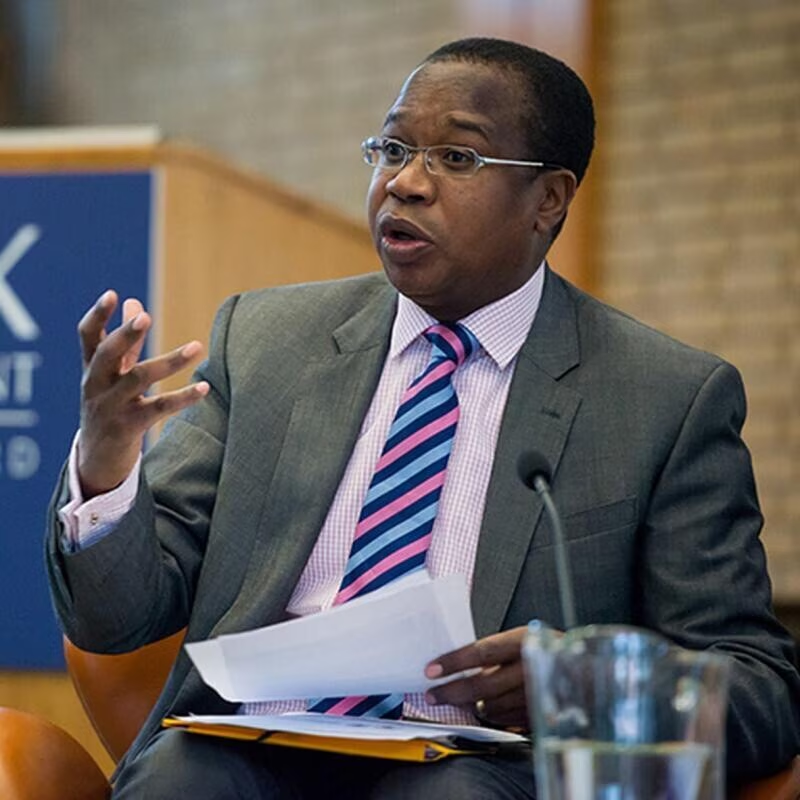
Standing beside newly installed radiotherapy equipment at Parirenyatwa Group of Hospitals, Finance, Economic Development and Investment Promotion Minister Mthuli Ncube described the machines as evidence that targeted taxes can finance critical public health infrastructure when revenues are ring-fenced and protected from competing government demands.
The equipment, funded through proceeds from the sugar-content levy introduced in the 2024 National Budget, marks the first phase of a broader effort to modernise Zimbabwe’s cancer treatment system, which has struggled for years with ageing equipment, treatment backlogs and limited access outside Harare and Bulawayo.
“The levy is ring-fenced for health, with cancer treatment being the first priority,” Prof Ncube said during a joint tour of Parirenyatwa Hospital alongside Health and Child Care Minister Douglas Mombeshora.
The sugar tax, officially known as the Special Surtax on Sugar Content, was introduced in January 2024 as part of Treasury’s growing reliance on so-called “health taxes” aimed at both changing consumer behaviour and generating revenue for public healthcare. Initially set at US$0.002 per gramme of sugar in beverages, the levy was later reduced to US$0.001 following concerns raised by beverage manufacturers.
What began as a contentious fiscal measure has since become a significant revenue source. Treasury collected approximately US$29.2 million from the sugar tax in 2024 and a further US$59.4 million in 2025, according to figures released by the Ministry of Finance. Combined collections now exceed US$88 million.
Those funds are now financing one of the largest investments in cancer treatment infrastructure in Zimbabwe’s recent history.
Health Minister Dr Mombeshora said the installation currently underway at Parirenyatwa and Mpilo Central Hospital represents the first phase of a national cancer treatment upgrade programme.
Phase One includes four radiotherapy machines — two multi-energy linear accelerators and two low-energy units — together with two CT scanners, at a total cost of approximately US$27 million.
“The cancers are diagnosed late and treatment is mainly successful when diagnosis happens early,” Dr Mombeshora said.
Zimbabwe’s cancer burden continues to rise, with cervical cancer, breast cancer and prostate cancer among the most prevalent forms of the disease. Health authorities estimate the country is currently carrying a treatment backlog of close to 800 patients awaiting radiotherapy services.
Each of the new machines has the capacity to treat roughly 150 patients per month, a development officials believe could significantly reduce waiting times and improve treatment outcomes.
The investment comes after years of concern over the state of public oncology services. Lawmakers and health advocacy groups have repeatedly questioned whether revenues generated through the sugar tax were translating into improvements at hospitals, particularly after collections exceeded US$30 million by the end of 2024 while cancer patients continued to face equipment shortages and long waiting lists.
Government officials now argue that the delivery and installation of the machines demonstrates that the model is beginning to work.
According to Prof Ncube, installation of the current batch of equipment is expected to be completed within weeks before additional machines are delivered to both Parirenyatwa and Mpilo.
The Finance Minister also signalled that Treasury intends to expand the use of earmarked taxes to address other public health challenges.
Revenue generated from airtime and data levies continues to be channelled into the national health fund, while proceeds from gambling taxes are being targeted towards the construction and support of rehabilitation facilities for young people affected by drug and substance abuse.
Treasury figures show that airtime levies generated US$114.9 million for the Health Fund during 2024 and 2025, with 50 percent of collections legally transferred to health programmes.
For Dr Mombeshora, however, the next challenge extends beyond Harare and Bulawayo.
Phase Two of the programme will focus on strengthening diagnosis and treatment capacity through the acquisition of MRI scanners, CT scanners, advanced X-ray systems, ultrasound equipment and brachytherapy machines used in the treatment of cervical and prostate cancers.
Longer term, Government plans to decentralise cancer care to provincial centres.
“It is difficult to say everyone from Binga, Beitbridge or Mukumbura must come to Harare or Bulawayo for treatment,” Dr Mombeshora said.
The Ministry of Health is already planning future cancer treatment centres at Chinhoyi Provincial Hospital, facilities in Gweru and in Manicaland, although officials acknowledge expansion will depend on training sufficient specialist personnel to operate the equipment.