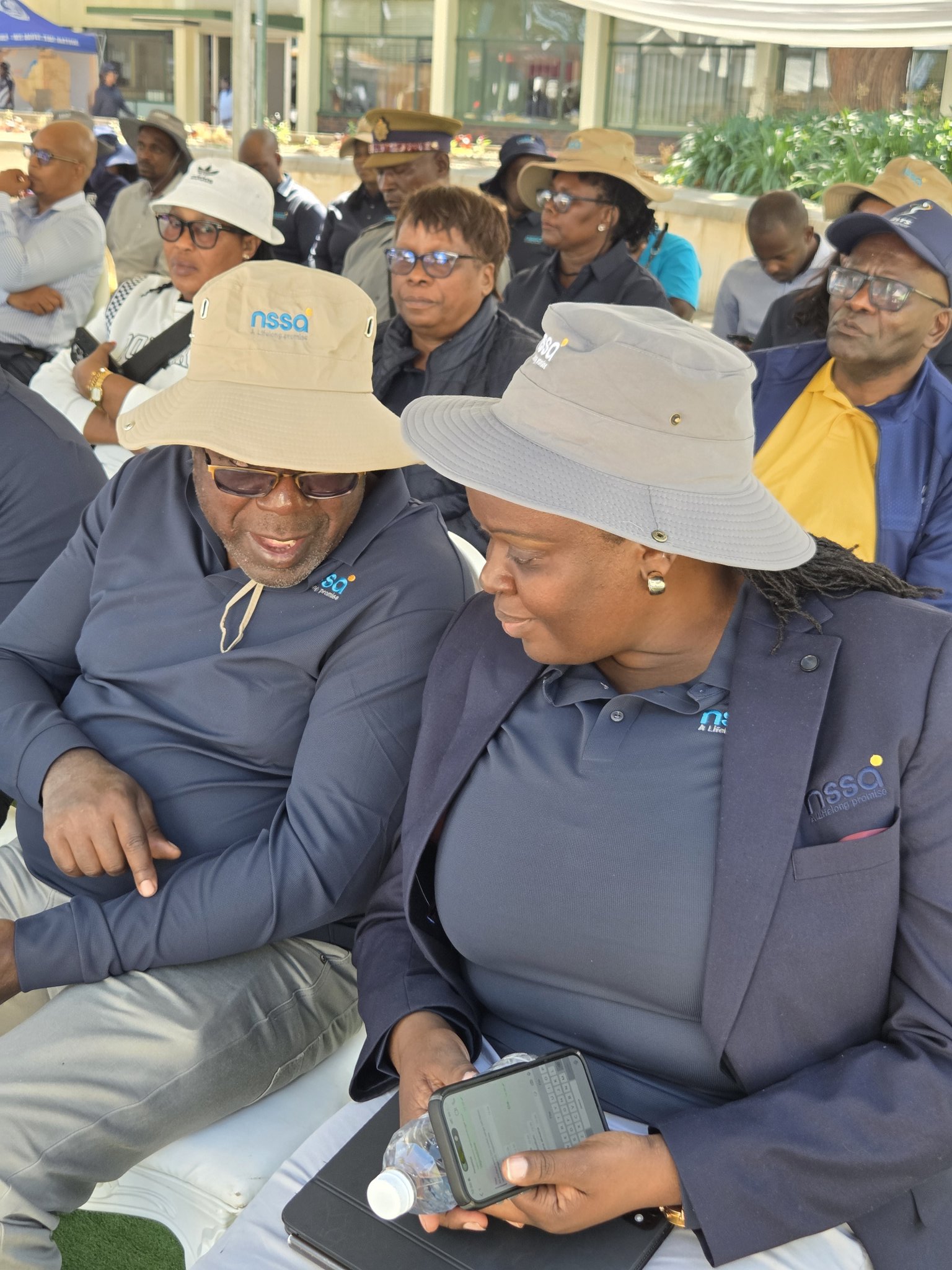
At a time when Zimbabwe’s economy is increasingly dependent on mining, construction and a sprawling informal sector, government officials and labour regulators are intensifying calls for a stronger workplace safety culture, warning that preventable injuries and occupational illnesses continue to impose heavy human and economic costs.
Speaking during World Day for Safety and Health at Work commemorations held at the Gweru Civic Centre, National Social Security Authority chairman Christopher Dube said Zimbabwe’s adoption of the “Vision Zero” framework represented more than a public-awareness campaign.
“It is not merely a slogan, but a cultural transformation,” Dube said, describing the initiative as an attempt to embed safety, health and wellbeing into the daily operations of workplaces across the country.
The Vision Zero model, promoted internationally as a preventative approach to occupational accidents and diseases, has gained traction in several developing economies seeking to reduce workplace fatalities while improving productivity and worker welfare.
Dube said Zimbabwe needed to move beyond compliance-based approaches and instead cultivate what he described as a “strong prevention culture” across all sectors of the economy, including mining, agriculture, manufacturing and transport — industries that continue to record some of the country’s highest occupational risks.
The commemorations brought together government officials, employers, labour representatives and workplace safety practitioners amid growing concern over conditions faced by workers in both formal and informal employment.
Permanent Secretary in the Ministry of Public Service, Labour and Social Welfare, Pfungwa Kunaka, speaking on behalf of Labour Minister Edgar Moyo, said the government intended to accelerate reforms designed to modernise occupational safety systems and strengthen enforcement mechanisms.
Kunaka said authorities would continue providing “leadership, resources and policy direction” to improve occupational safety standards, while also expanding social protection mechanisms to cover workers operating outside the formal economy.
Zimbabwe’s informal sector, estimated to employ the majority of the country’s workforce, often falls outside conventional labour protections, leaving many workers exposed to hazardous conditions without insurance, compensation or adequate regulatory oversight.
Kunaka said government was moving toward the implementation of a new Occupational Safety and Health Act, legislation authorities believe will consolidate and strengthen workplace protections in response to evolving labour conditions.
“The journey towards Vision Zero is a marathon, not a sprint,” Kunaka said. “It demands unwavering commitment, strong partnerships, and a shared belief that every workplace injury, disease, and death is preventable.”
The remarks underscore a broader policy challenge confronting Zimbabwe and many African economies: balancing industrial expansion and economic survival with worker protection in sectors where enforcement capacity remains uneven.
For NSSA, which has increasingly positioned itself not only as a compensation authority but also as a workplace safety advocate, the campaign reflects an attempt to shift attention toward prevention rather than post-accident intervention.
Officials at the commemorations said reducing workplace injuries would not only save lives but also lower production disruptions, compensation costs and long-term healthcare burdens — issues businesses and governments alike are struggling to manage in a volatile economic climate.
As Zimbabwe pushes for industrial growth, mining expansion and infrastructure development, policymakers say workplace safety will increasingly become central to sustaining productivity and protecting labour in one of Southern Africa’s most resource-driven economies.