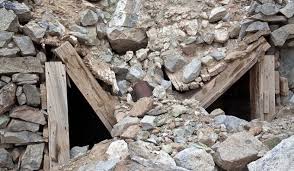
The chairman of Parliament’s Public Accounts Committee has delivered one of the bleakest assessments yet of Zimbabwe’s once-iconic steelmaker, declaring that Ziscosteel is effectively beyond revival in its current state and warning the sovereign wealth-backed Mutapa Investment Fund against sinking more money into the deteriorating industrial giant.
Speaking after parliamentary inspections of several state-linked enterprises, Public Accounts Committee chair Caston Matewu said the massive Redcliff steel complex had fallen into such disrepair that attempts to restore operations using existing infrastructure would likely be economically unsustainable.
“To put it in short, Zisco Steel is dead,” Matewu said, describing machinery at the plant as “obsolete and rusty.”
The remarks underscore the deepening uncertainty surrounding the future of one of Zimbabwe’s most symbolic industrial assets, once viewed as the backbone of the country’s heavy manufacturing ambitions. At its peak, Ziscosteel employed thousands of workers and anchored economic activity across the Midlands province, supplying steel for railways, construction and manufacturing industries throughout southern Africa.
But decades of underinvestment, corruption allegations, debt accumulation and failed rescue plans have reduced the sprawling complex into a largely dormant industrial shell.
Matewu suggested the government-backed Mutapa Investment Fund — which has been consolidating strategic state assets under its control — should instead focus on alternative commercial uses tied to Zisco’s extensive mineral holdings rather than attempting a direct revival of steel production.
“We’ve got this asset. There’s limestone there in the cliffs. What else can be done with that?” he said, urging Mutapa to “think outside the box.”
His comments also reflected growing recognition of the shifting regional steel landscape, particularly the rise of the Chinese-backed Dinson Iron and Steel Company project in Manhize, which is expected to become one of Africa’s largest integrated steel operations once fully operational.
“There’s competition from Manhize as well,” Matewu said. “It won’t be wise for Mutapa to pour money into Zisco Steel in its current state.”
The parliamentary committee’s broader tour of state enterprises painted a mixed picture of Zimbabwe’s industrial recovery efforts.
Matewu described the country’s railway infrastructure as another urgent national concern, saying lawmakers were alarmed by the condition of roads damaged by heavy mining traffic that should ideally be transported by rail.
He singled out the struggling National Railways of Zimbabwe for urgent rehabilitation, arguing that the collapse of rail freight systems was now imposing wider economic and infrastructure costs.
“We drove from Hwange to Gwayi and the road is atrocious,” he said. “A lot of coal is being transported by road which really should be transported by rail.”
The committee is expected to engage Mutapa Investment Fund executives before compiling a formal report to Parliament, where lawmakers will issue recommendations to the executive branch on the future direction of several state-linked enterprises.
Under Zimbabwean parliamentary procedures, the government is expected to formally respond to the committee’s recommendations through Treasury Minutes within 10 days after the report is tabled.
While sharply critical of entities such as Ziscosteel and NRZ, Matewu said lawmakers had been encouraged by developments at Zimbabwe Power Company and Mutapa Gold Resources, which he described as examples of clearer growth-oriented planning under Mutapa’s oversight.
He pointed to ongoing expansion projects at Hwange Power Station, including Chinese-financed generating units and future plans for additional capacity, as signs of more coherent long-term industrial strategy.
For many Zimbabweans, however, the declaration that “Zisco Steel is dead” carries weight beyond economics. The company has long occupied a near-mythic place in the country’s post-independence industrial identity — a symbol of both the ambitions and failures of Zimbabwe’s state-led development model.