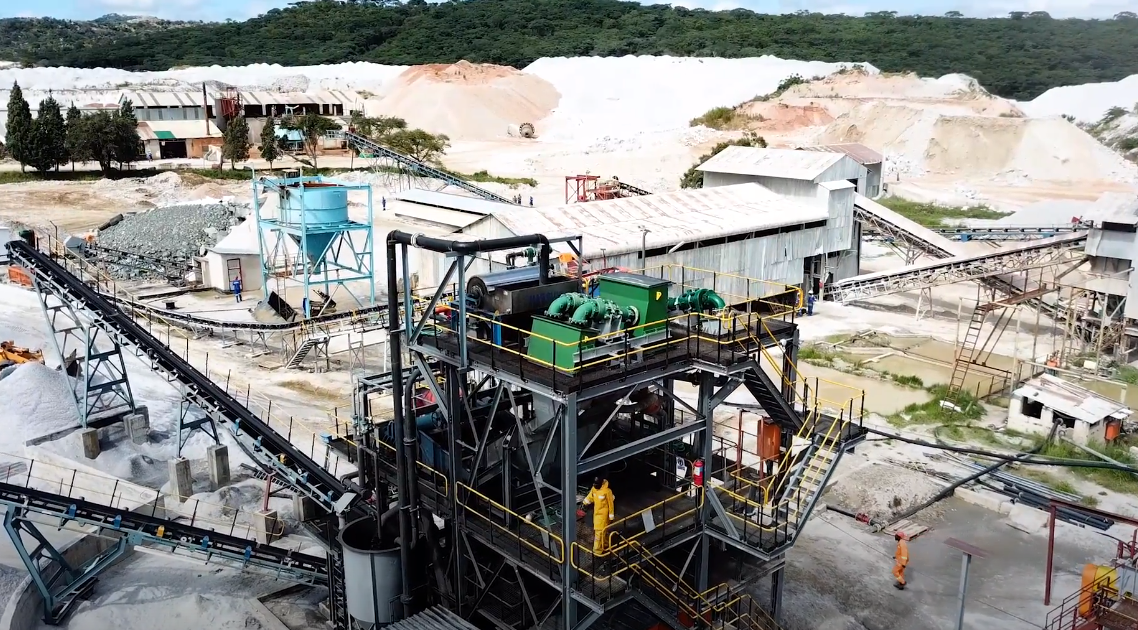
For years, Bikita Minerals has been synonymous with lithium, one of the world’s most sought-after minerals powering the global transition to electric vehicles and renewable energy. But beneath the same pegmatite deposits that have placed the mine on the international map lies another resource attracting increasing strategic interest: caesium.
This week, Bikita Minerals commissioned a dedicated caesium processing plant, a move that signals a broader shift in Zimbabwe’s mining strategy from exporting raw minerals towards producing higher-value products destined for specialised global industries.
The commissioning represents more than the addition of another processing facility. It reflects a growing recognition that Zimbabwe’s vast mineral wealth extends beyond lithium and that extracting greater economic value will increasingly depend on processing minerals locally rather than exporting them in their raw form.
Assistant General Manager Thomas Mufumi said the new facility will recover caesium from lithium-bearing ores mined at Bikita, enabling the company to produce one of the world’s rarest and most strategically important metals.
“Caesium is mainly used in technology, particularly in atomic watches,” Mufumi said. “These high-precision watches are used for GPS systems and telecommunications. Caesium is also used as an additive in drilling fluids used in the petroleum industry.”
While lithium has become the headline mineral of the clean energy revolution, caesium occupies an equally important—though less publicised—position within modern technology.
The silvery-gold alkali metal is essential in the manufacture of atomic clocks, the ultra-precise timekeeping devices that underpin satellite navigation systems, internet synchronisation, telecommunications networks and global financial transactions. Caesium compounds are also widely used in oil and gas drilling fluids because of their high density and chemical stability, while specialised applications extend to medical imaging, scientific instruments, radiation detection and aerospace technologies.
Global production of caesium is exceptionally limited, making it one of the world’s critical minerals. Commercially viable deposits are rare, with only a handful of mines globally producing pollucite—the principal ore from which caesium is extracted. This scarcity has elevated the mineral’s strategic importance as governments seek secure supply chains for technologies considered vital to national security and industrial competitiveness.
For Zimbabwe, the new plant aligns closely with the Government’s mineral beneficiation agenda, which seeks to capture more value from the country’s abundant natural resources. Rather than exporting concentrates for processing abroad, policymakers have increasingly encouraged mining companies to establish downstream processing facilities capable of producing higher-value mineral products.
Officials argue that beneficiation delivers multiple economic benefits, including increased export earnings, higher tax revenues, technology transfer, industrial development and the creation of skilled employment opportunities.
The commissioning of the caesium plant also illustrates the changing economics of lithium mining. Modern operations are increasingly seeking to maximise recovery from every component of the ore body, extracting not only lithium but also associated critical minerals that command premium prices in international markets.
Bikita Minerals, among Zimbabwe’s largest lithium producers, has invested significantly in expanding its processing infrastructure over recent years as demand for battery minerals accelerates worldwide. The latest investment diversifies the company’s product portfolio while strengthening Zimbabwe’s position within the global critical minerals supply chain.
The International Energy Agency projects that demand for critical minerals will continue rising sharply over the coming decades as countries expand electric vehicle production, renewable energy generation, digital infrastructure and advanced manufacturing. Although lithium remains central to this transition, minerals such as caesium are increasingly recognised as indispensable components of the technologies supporting the modern global economy.
Industry analysts say countries capable of producing processed critical minerals rather than raw ores are likely to secure greater long-term economic returns and improve resilience against commodity price volatility.
For Zimbabwe, whose mining sector remains the country’s largest foreign currency earner, the commissioning of the Bikita caesium processing plant represents another step in repositioning the industry from a supplier of raw materials to a producer of specialised mineral products with greater value addition.
As competition intensifies for secure supplies of critical minerals worldwide, investments of this nature are expected to play an increasingly important role in determining how much of the global mineral value chain Zimbabwe is able to capture within its own borders.