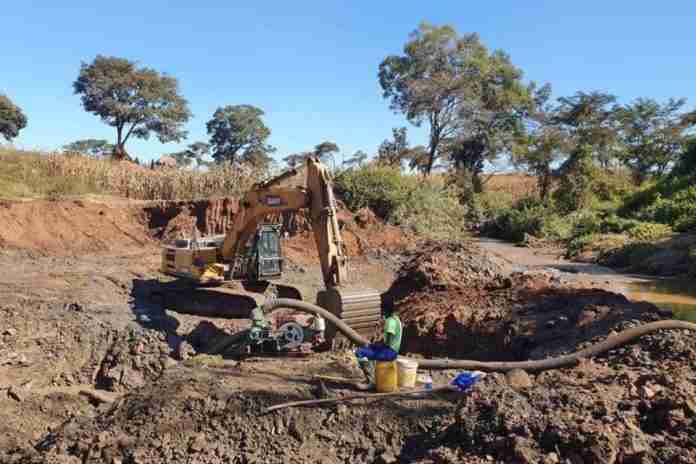
Zimbabwe has declared a nationwide state of disaster over severe environmental damage caused by years of alluvial gold mining, giving the government sweeping new powers to rehabilitate degraded rivers while tightly controlling future riverbed activities.
The emergency declaration, contained in Statutory Instrument 91 of 2026 and gazetted on May 28, establishes a state-led river rehabilitation framework covering some of the country’s most heavily damaged waterways.
The law states that river ecosystems across Zimbabwe have suffered extensive degradation from legal and illegal alluvial mining activities, including pollution, siltation, destruction of river channels and disruption of aquatic biodiversity.
Authorities identified major rivers affected by the damage, including the Mazowe, Save, Sanyati, Mupfure, Umzingwane and Mutare river systems spread across Mashonaland, Midlands, Manicaland and Matabeleland provinces.
The statutory instrument creates an extensive command structure led by an Inter-Ministerial Committee on Riverine Ecosystems Rehabilitation, jointly chaired by the ministers responsible for environment and water resources, alongside ministries responsible for mining, local government and home affairs.
The framework gives the committee powers to approve rehabilitation contractors, supervise restoration projects and monitor environmental compliance through the Environmental Management Agency, ZINWA and provincial authorities.
Under the new rules, companies approved for rehabilitation work may recover minerals encountered during restoration activities, although the law insists the programme cannot be used as a cover for ordinary alluvial mining operations.
Recovered minerals remain subject to royalties, government oversight and mineral recovery permits issued through mining authorities.
The regulations impose strict operating conditions on contractors, including bans on rehabilitation work during peak rainy seasons, restrictions on processing plants within 500 metres of riverbanks and mandatory environmental audits before sites are cleared of liability.
The rehabilitation programme includes riverbank stabilisation, sediment management, revegetation, water quality monitoring and restoration of natural river channels and habitats.
The government says the intervention is aimed at restoring biodiversity, protecting water infrastructure and strengthening climate resilience as pressure mounts on Zimbabwe’s river systems from mining activity, droughts and rising demand for water resources.
📲 Join more than 10000 others who get news updates from YaFM Zimbabwe – https://whatsapp.com/channel/0029VaDPqsZ5fM5TIAxYww1U