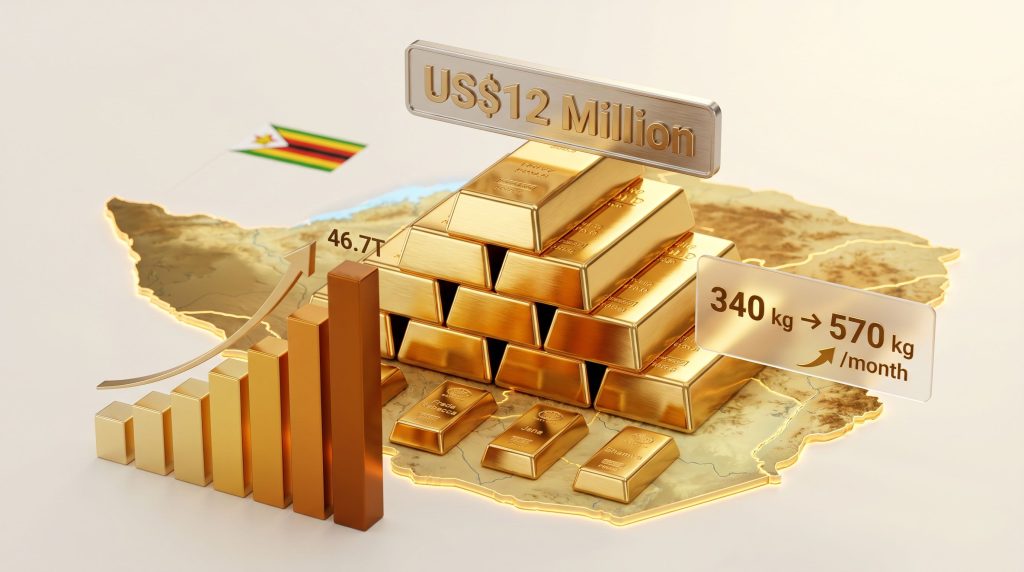
Zimbabwe has tripled its gold reserves over the past two years by forcing mining companies to pay royalties in bullion instead of cash, a policy aimed at underpinning a new local currency and reining in chronic inflation. Yet for most citizens, the U.S. dollar remains the currency of daily life.
The Reserve Bank of Zimbabwe has steadily accumulated gold, aided by rising global prices and a jump in domestic production. The hoard supports the ZiG, which has held relatively stable against the dollar over the past year—a rare feat in a country that has repeatedly seen its currencies collapse.
“It’s a good start,” said Tinashe Murapata, an economic analyst. “But we need to continuously have those gold reserves audited by external auditors, and they need to continuously keep those gold reserves.”
Despite the central bank’s build-up, the dollar still powers most transactions. Official data show the ZiG accounts for just 30% to 40% of payments processed through the national system. In the sprawling informal sector, where most Zimbabweans shop and trade, usage is far lower.
“It’s quite remote at the moment for the general person to really feel the impact of the gold reserves on the market,” said Malone Gwandu, another analyst. Still, he said, the foundation being built for the currency “is quite important for anchoring the currency and deepening its reach both locally and internationally.”
Zimbabwe expects gold deliveries to reach a record 60 metric tons this year. Authorities hope that milestone will further strengthen reserves and encourage broader ZiG adoption in the formal economy. For now, however, the metal-backed currency remains more a bet on the future than a medium for the present.